
Investment studios Cabo Branco, João Pessoa
Monthly payments of R$ 1,154.37 straight to the developer, no bank interest. And a studio on this waterfront earns, on average, R$ 73,000 a year on short-term rental.
Monthly payments of R$ 1,154.37, no bank interest. Waterfront studio averages R$ 73k/year on short-term rental.
Send me the property you're looking at and I'll give you its real return. No cost, no commitment.
Source: AirDNA and a proprietary portfolio of 91 comparable listings, August 2026. Other figures: audited operating history.
My asset is your trust, not the commission. If the numbers don't work, I'll tell you not to buy.Eduardo Henrique · CRECI 10817 · MyHome JP Investimentos
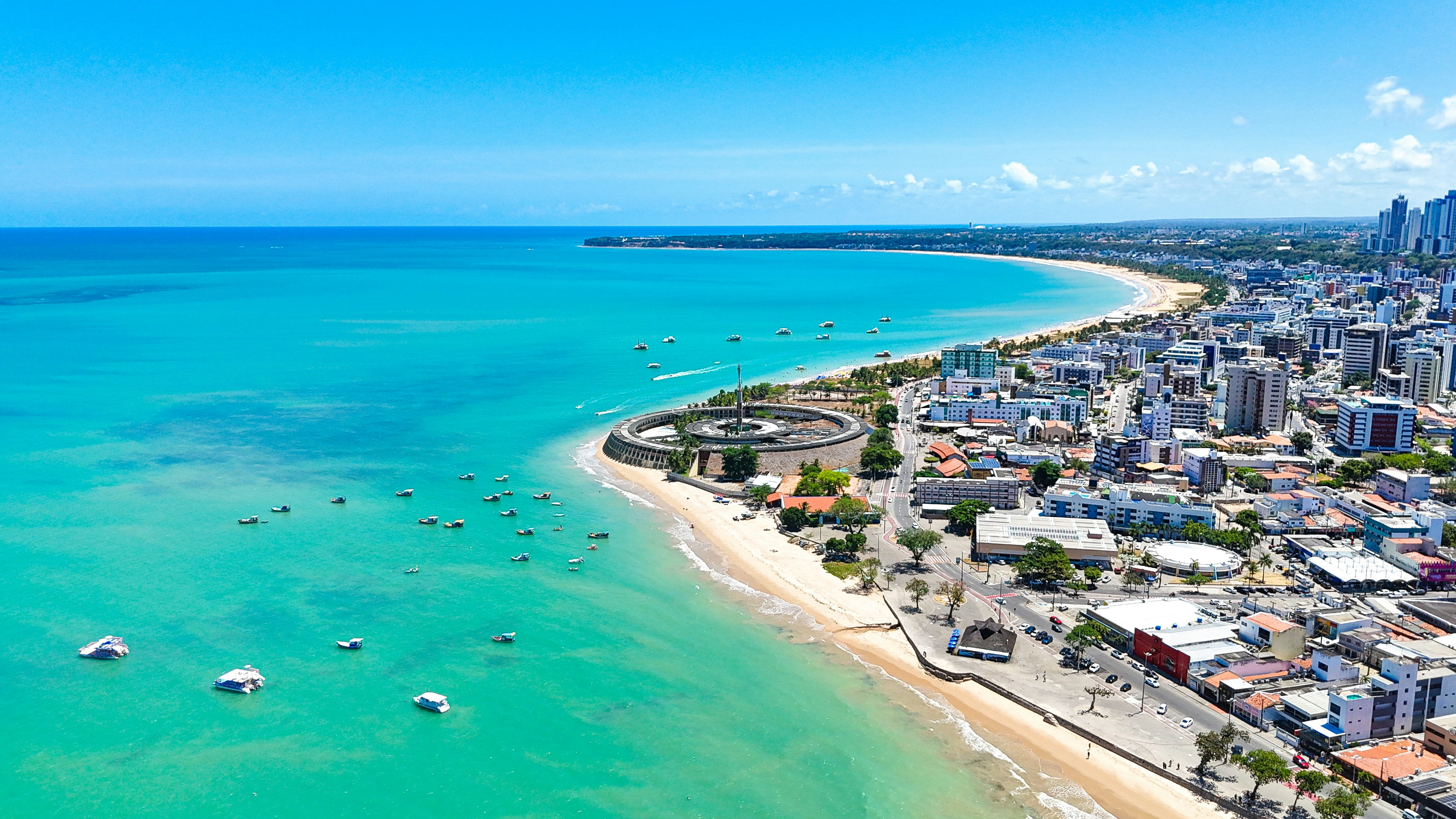
Cabo Branco neighborhood. You can walk to the beach.
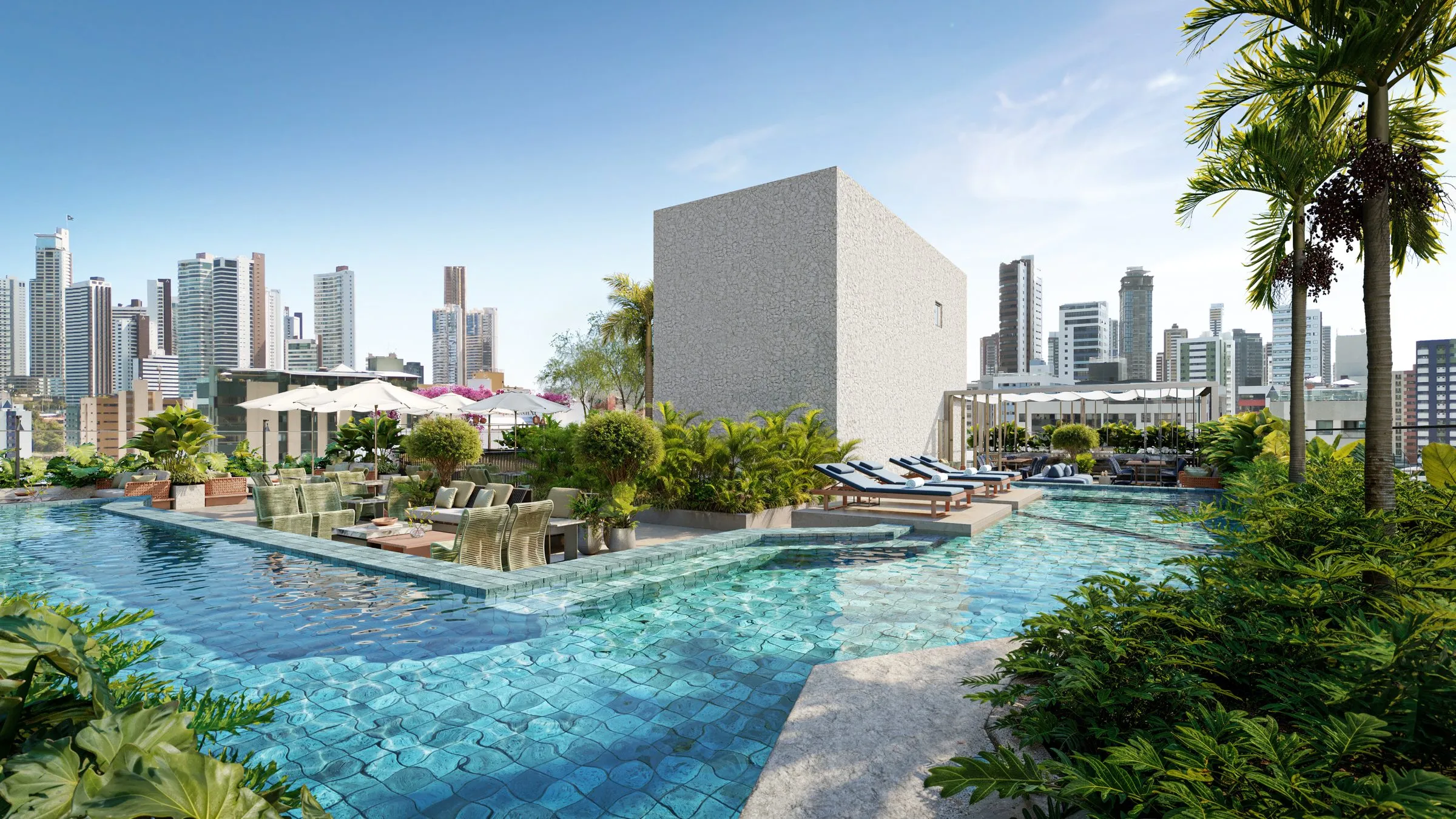
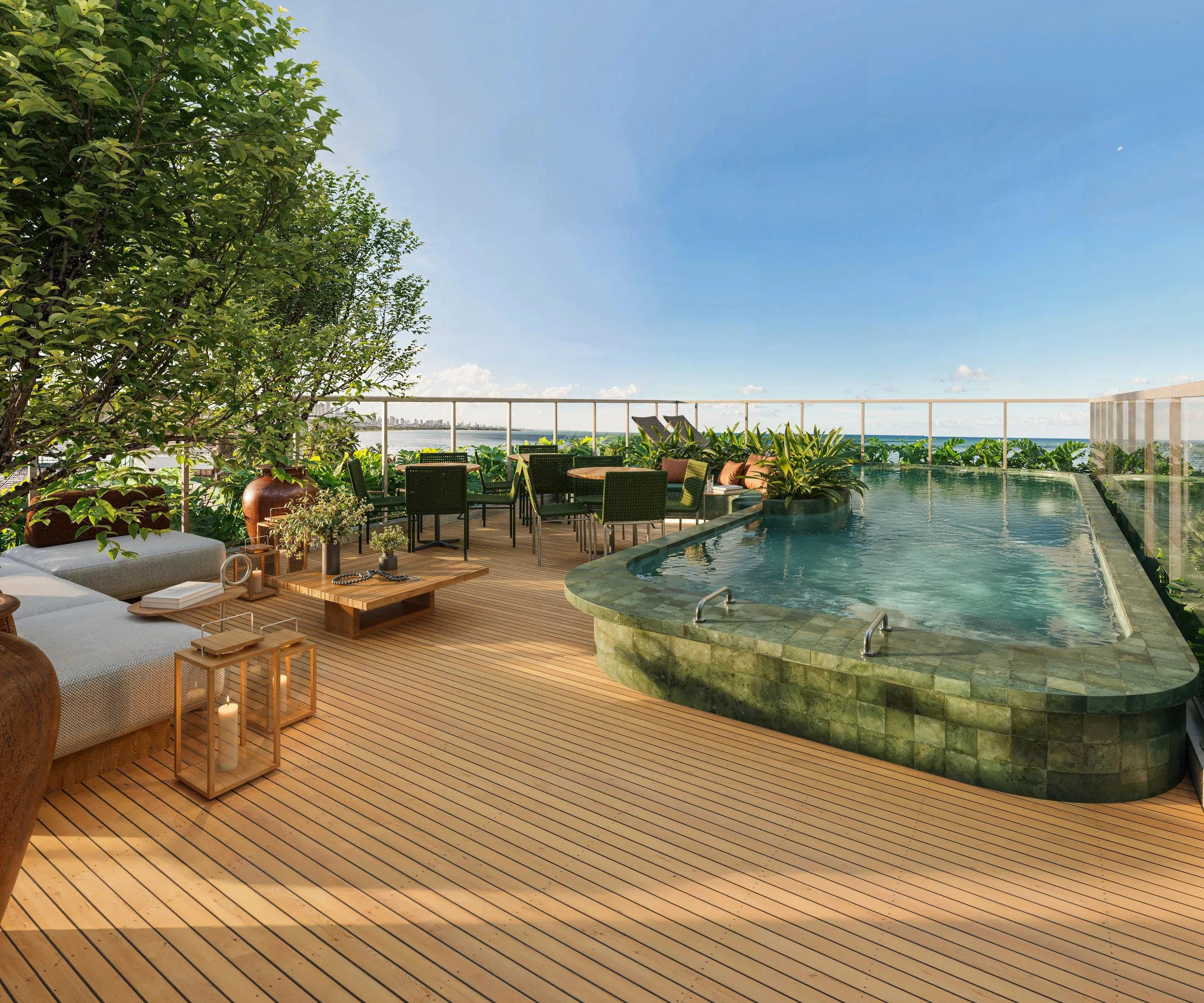
Same neighborhood, same beach, with resort-style leisure on the rooftop.
The thesis
The math has two phases. Until handover, R$ 1,154.37 a month, straight to the developer with no bank interest. From the keys onward, the apartment goes to work: the engine of return is the property's appreciation, and the rent covers the monthly cost while that happens.
Condition of the August 2026 price table. The developer updates the table periodically.
R$ 73,000≈ US$ 15
a year is the average revenue of a studio rented short-term in Cabo Branco: R$ 303 average nightly rate, 73% occupancy, 91 comparables monitored.
R$ 3,857≈ US$ 0
a month is what's left over on average, after condo fees, management, property tax and maintenance. More than three times this apartment's installment.
15.15% a year
was the property appreciation in João Pessoa at the close of 2025, FipeZap index. That's the engine of return: rent covers the monthly cost while it happens.
Location, and what it's worth
Cabo Branco neighborhood, João Pessoa's upscale waterfront. You walk down from the building straight onto the sand, and back up to a rooftop with a lap pool, gym and lounge. That combination is exactly what guests look for when they choose an apartment over a hotel room for the week.
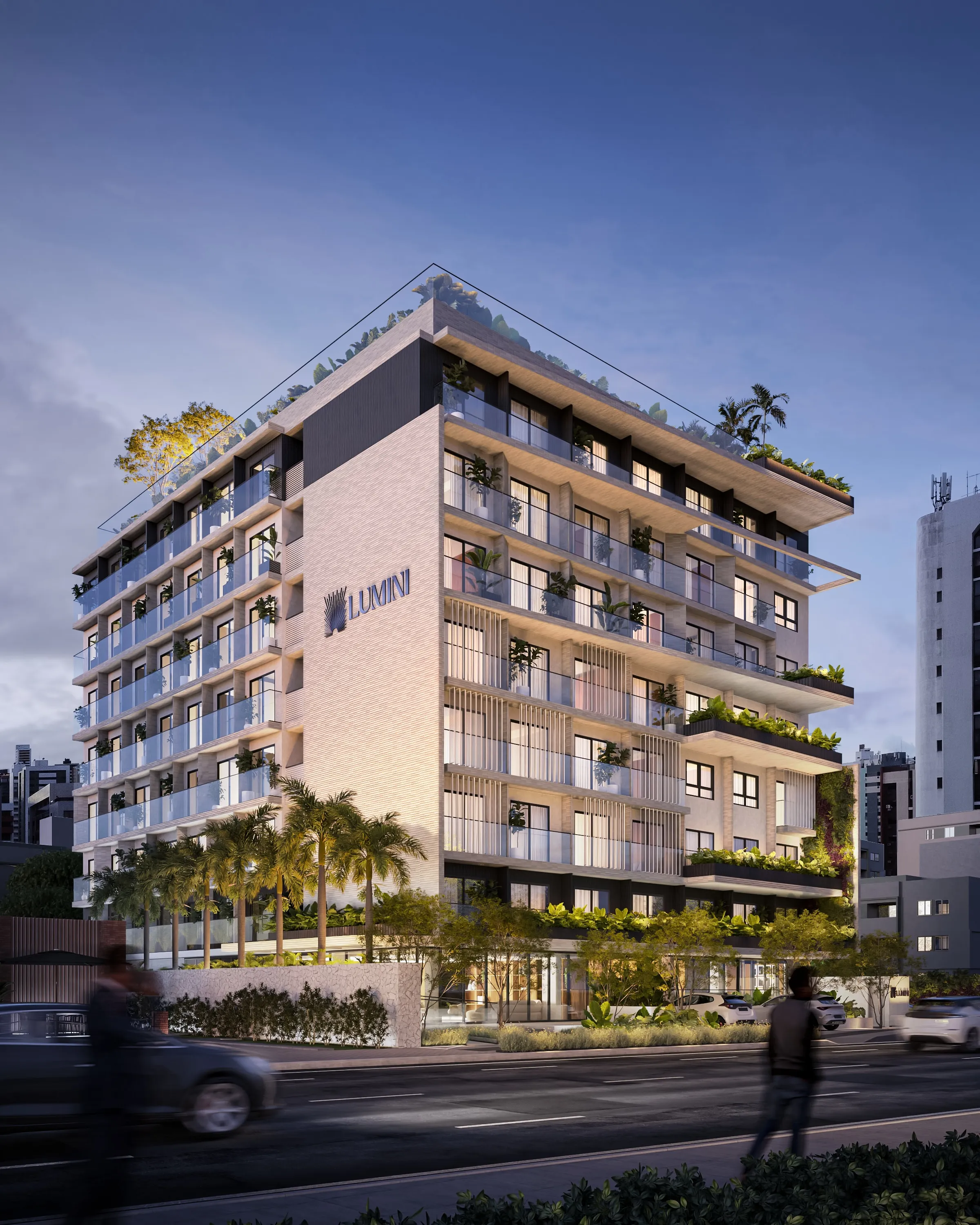
The studio the guest rents
East and south change light, view and what the guest will pay. The R.O.I. Consultation compares that before you choose.
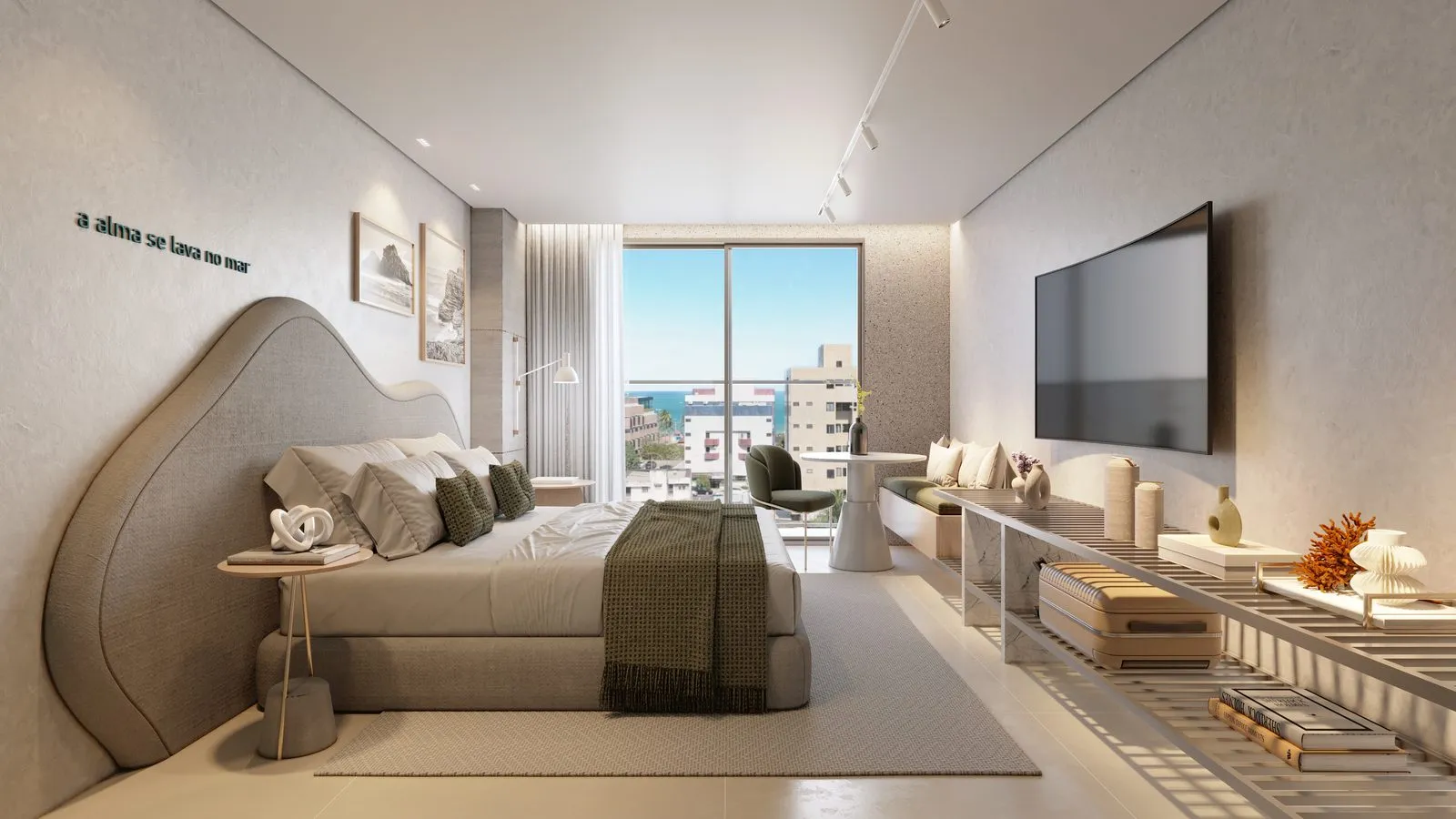
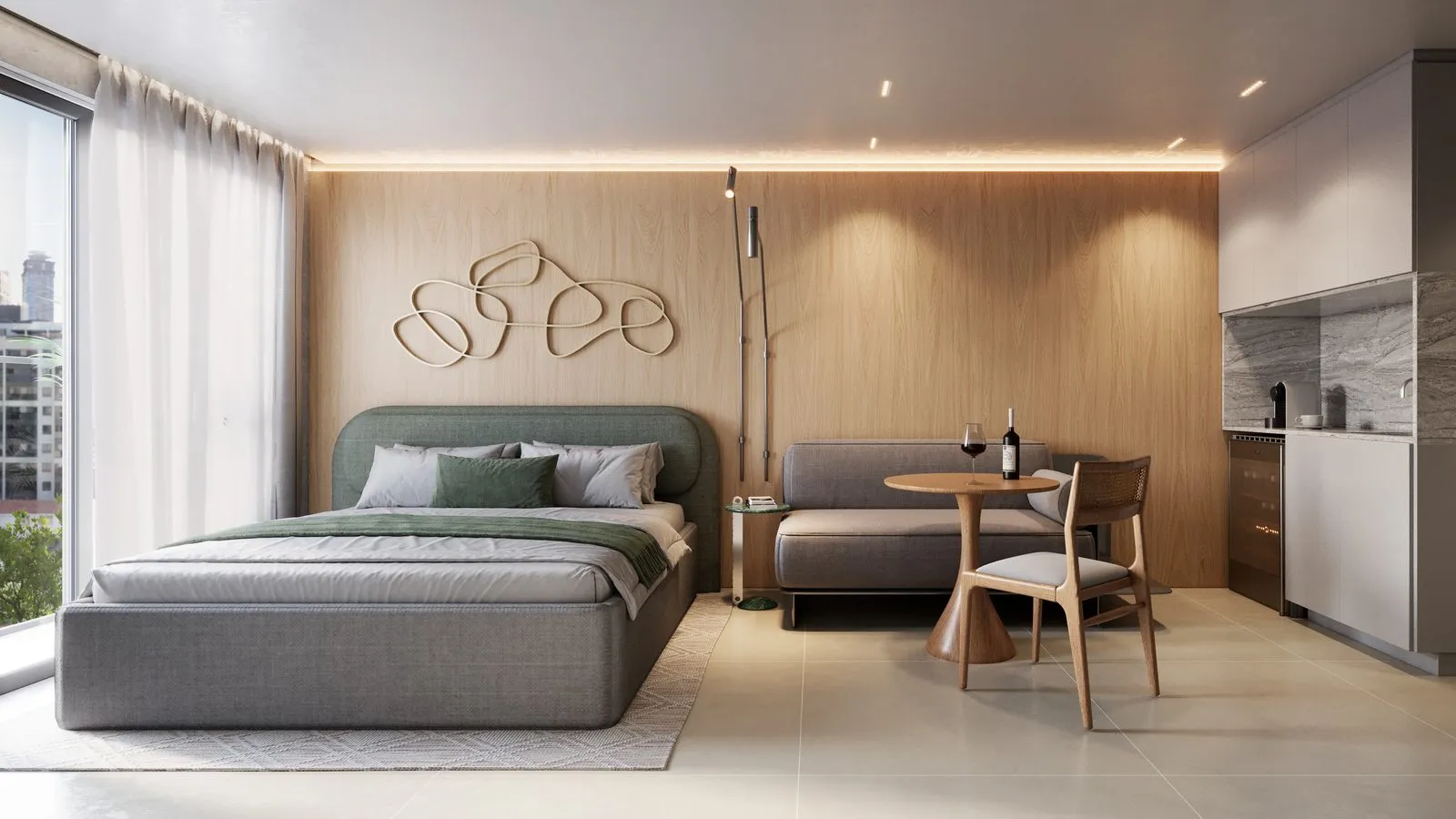
Leisure area
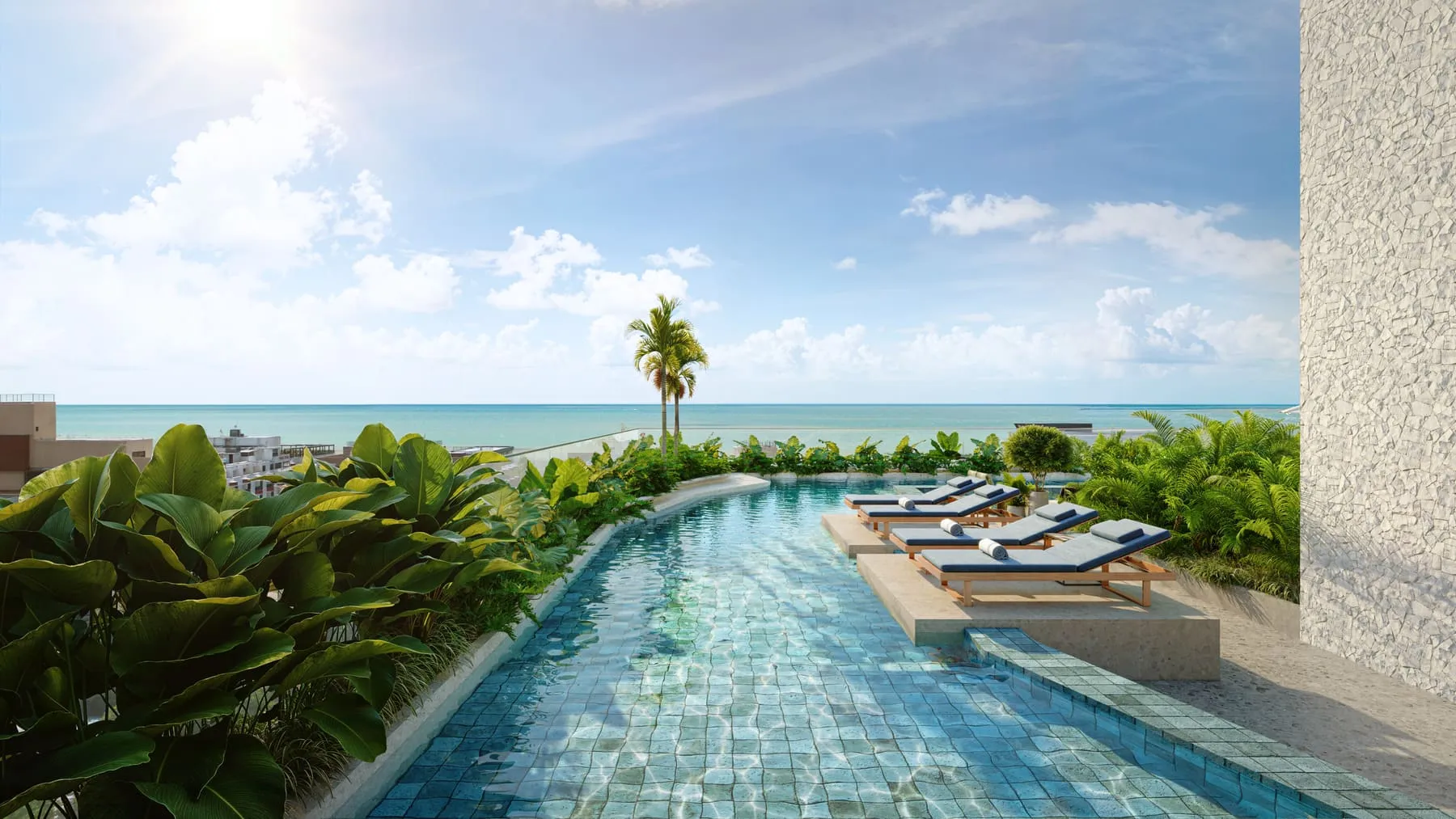
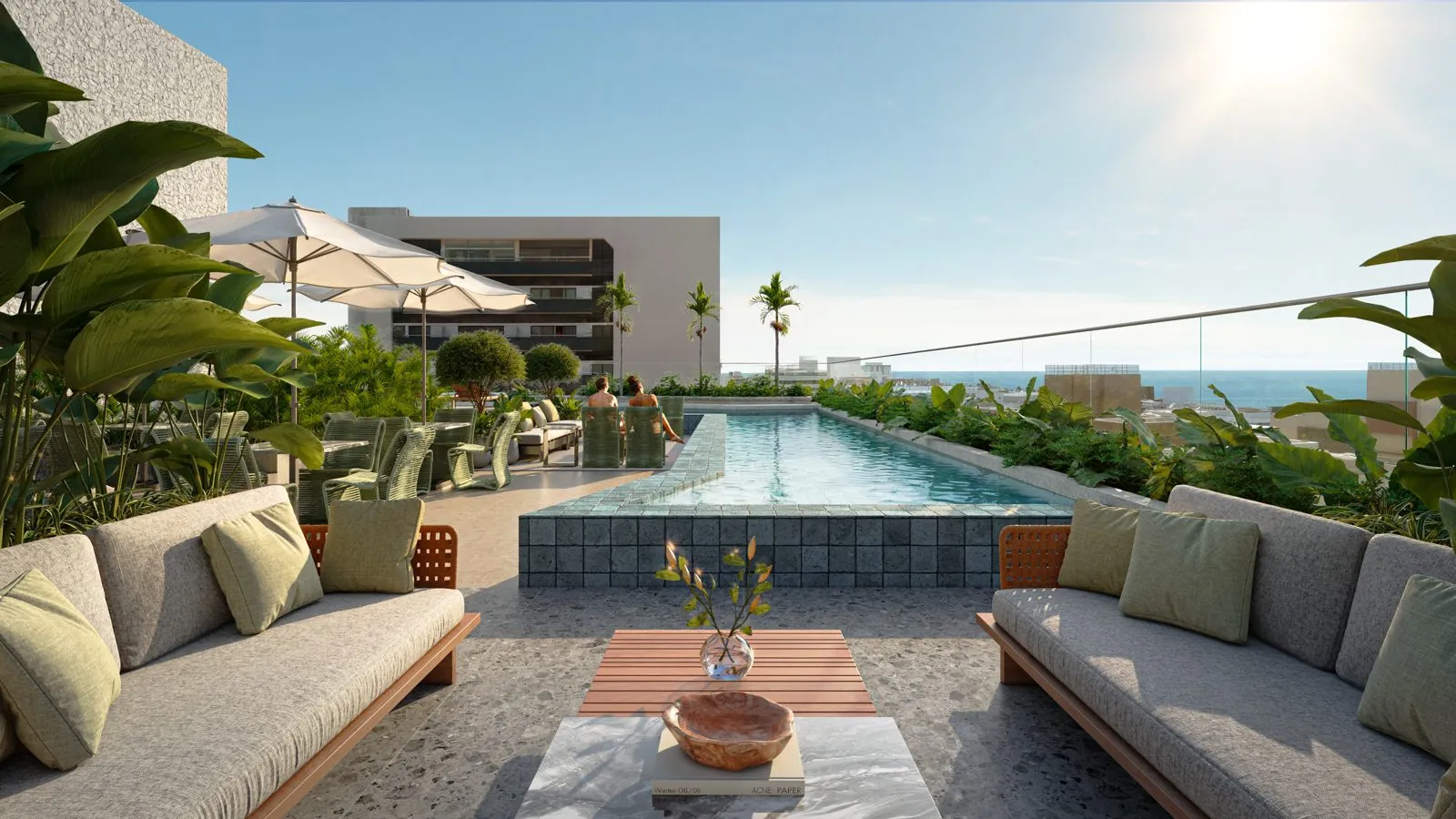
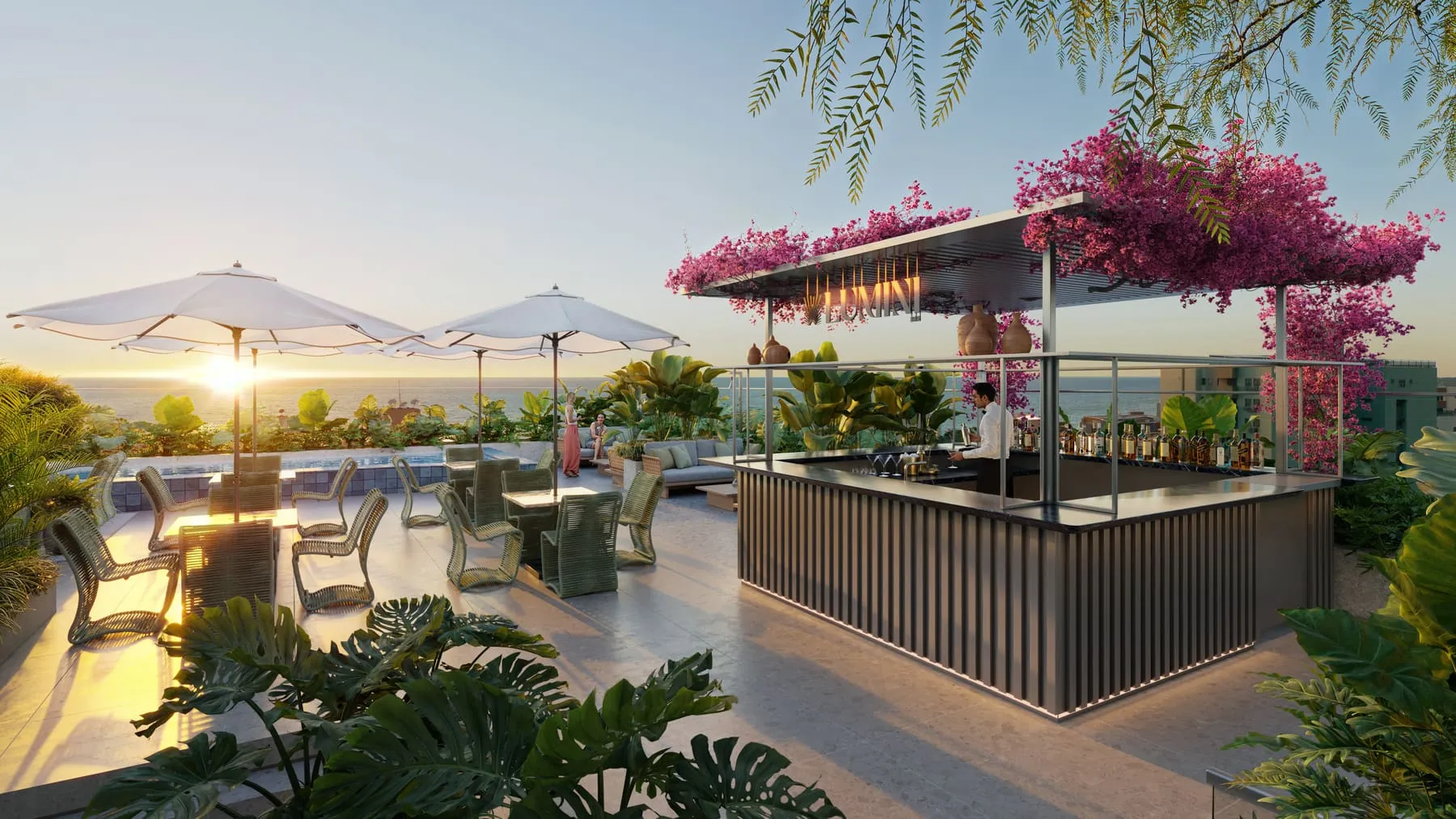
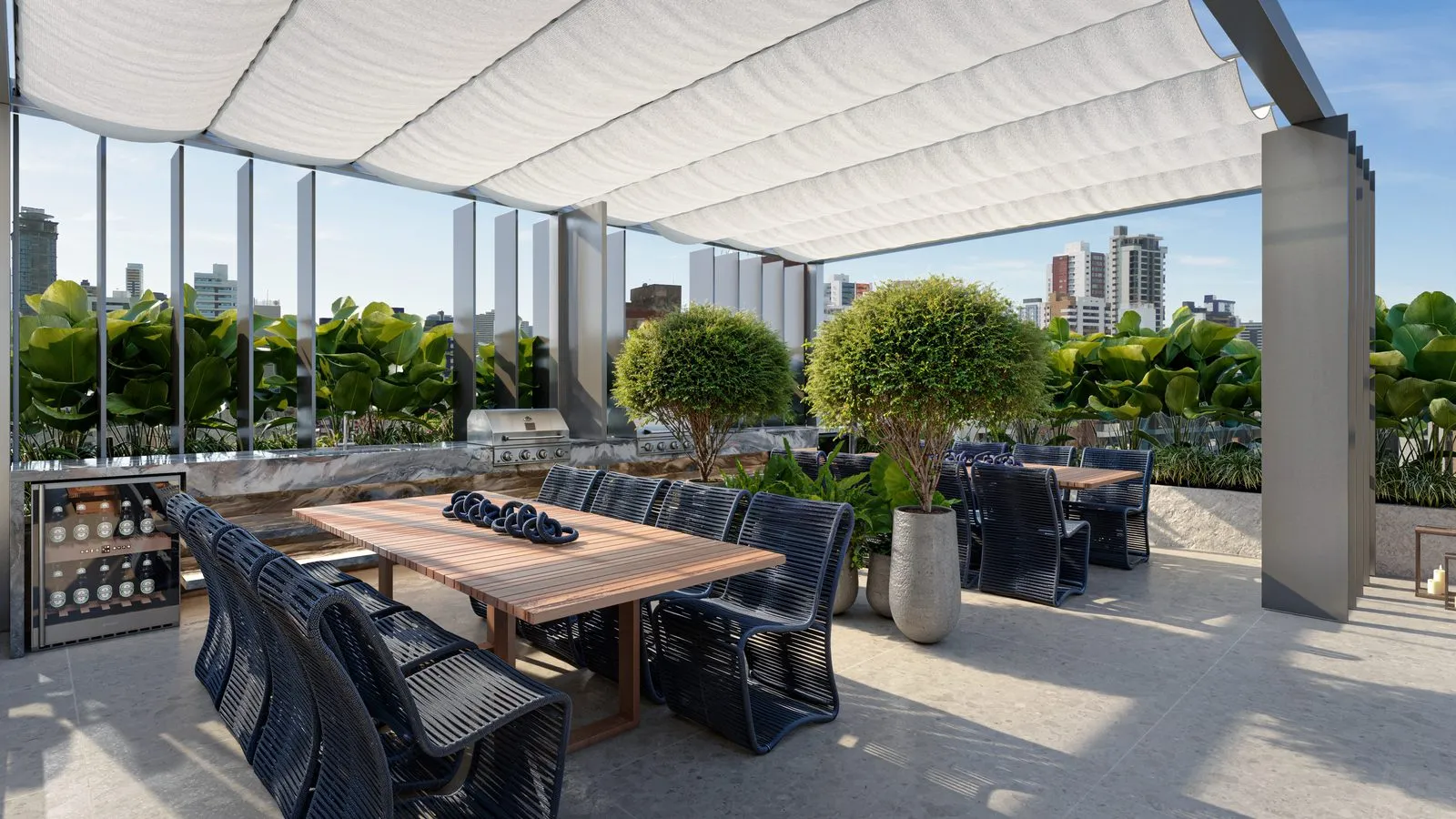
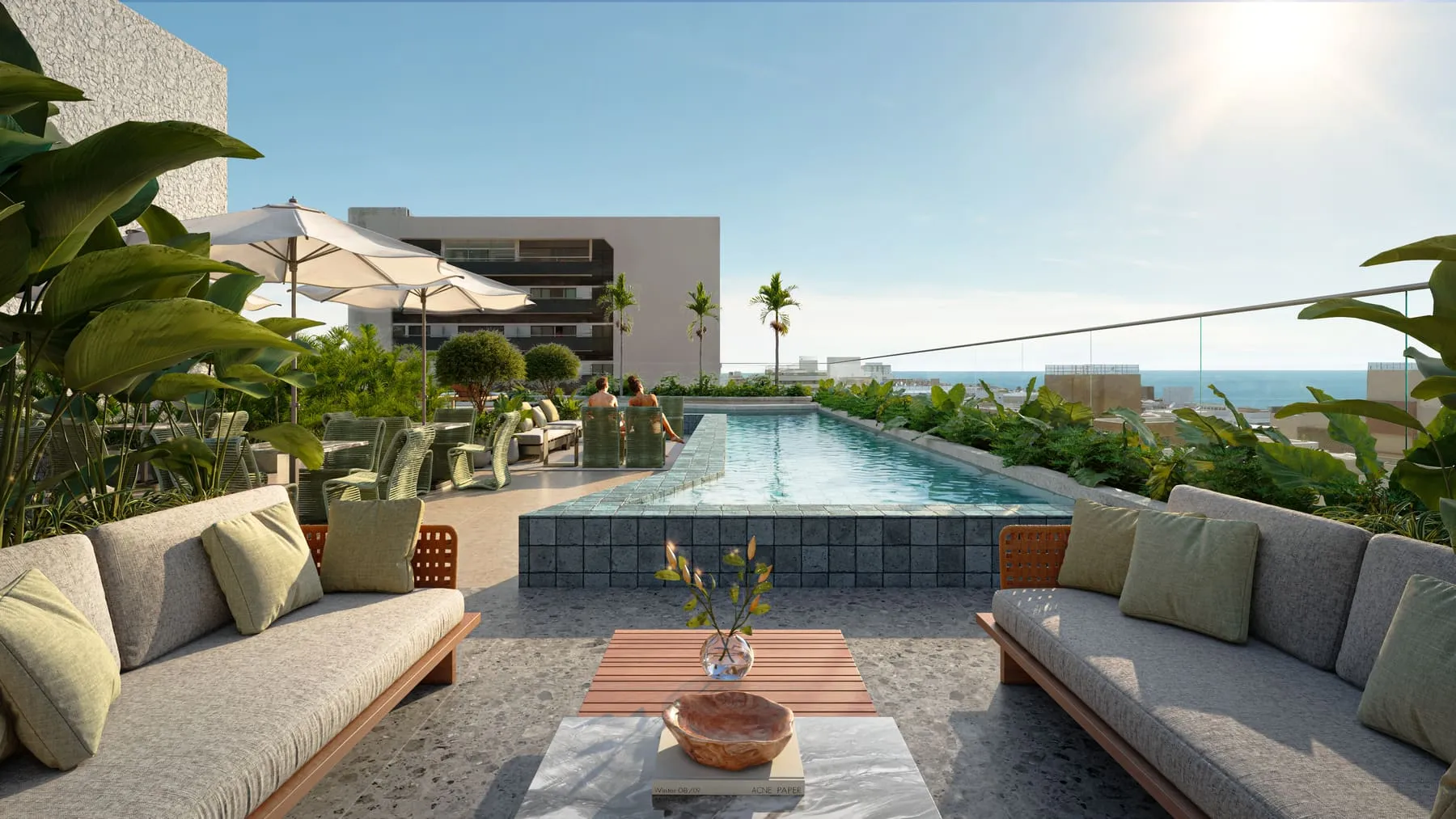
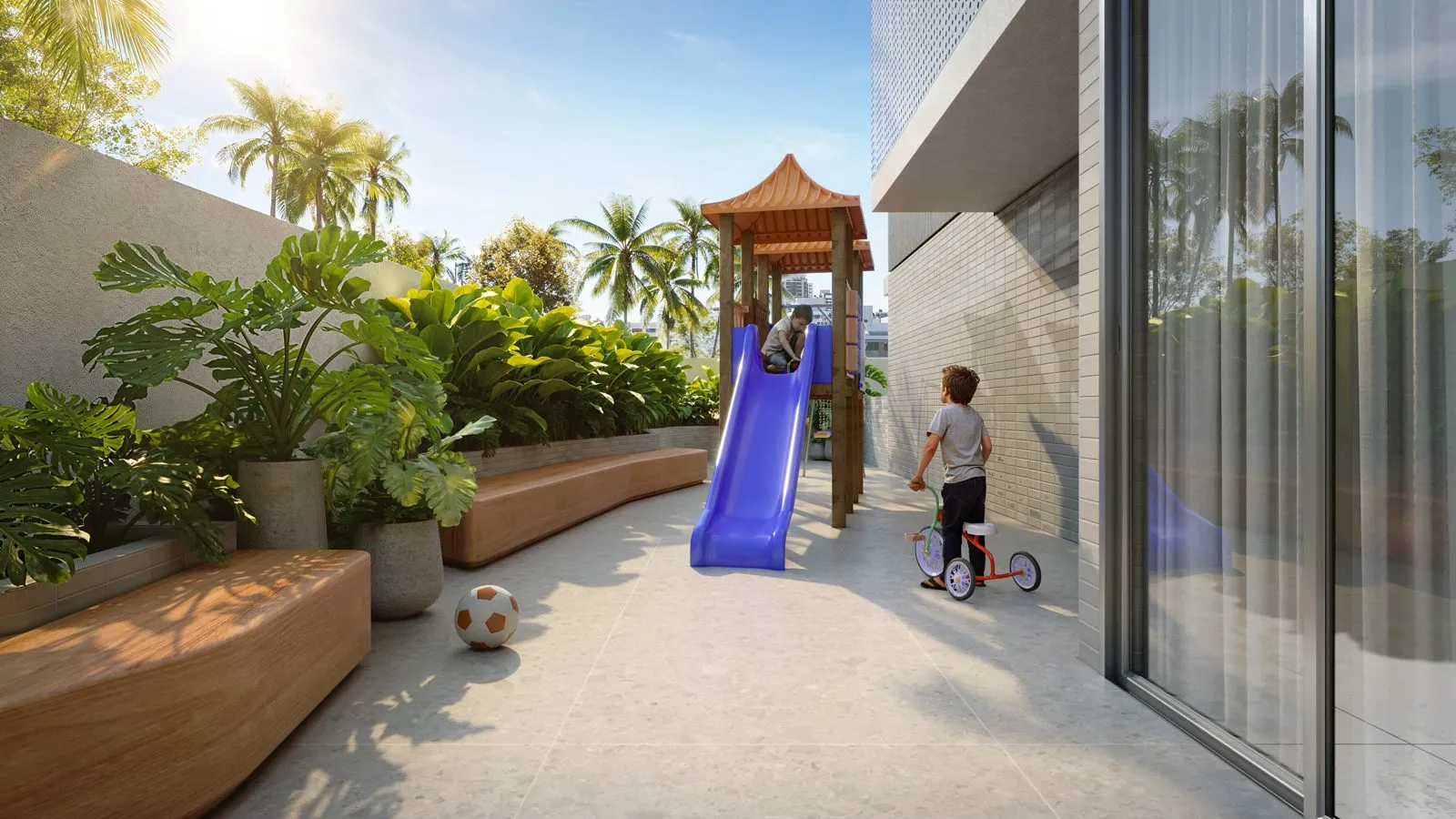
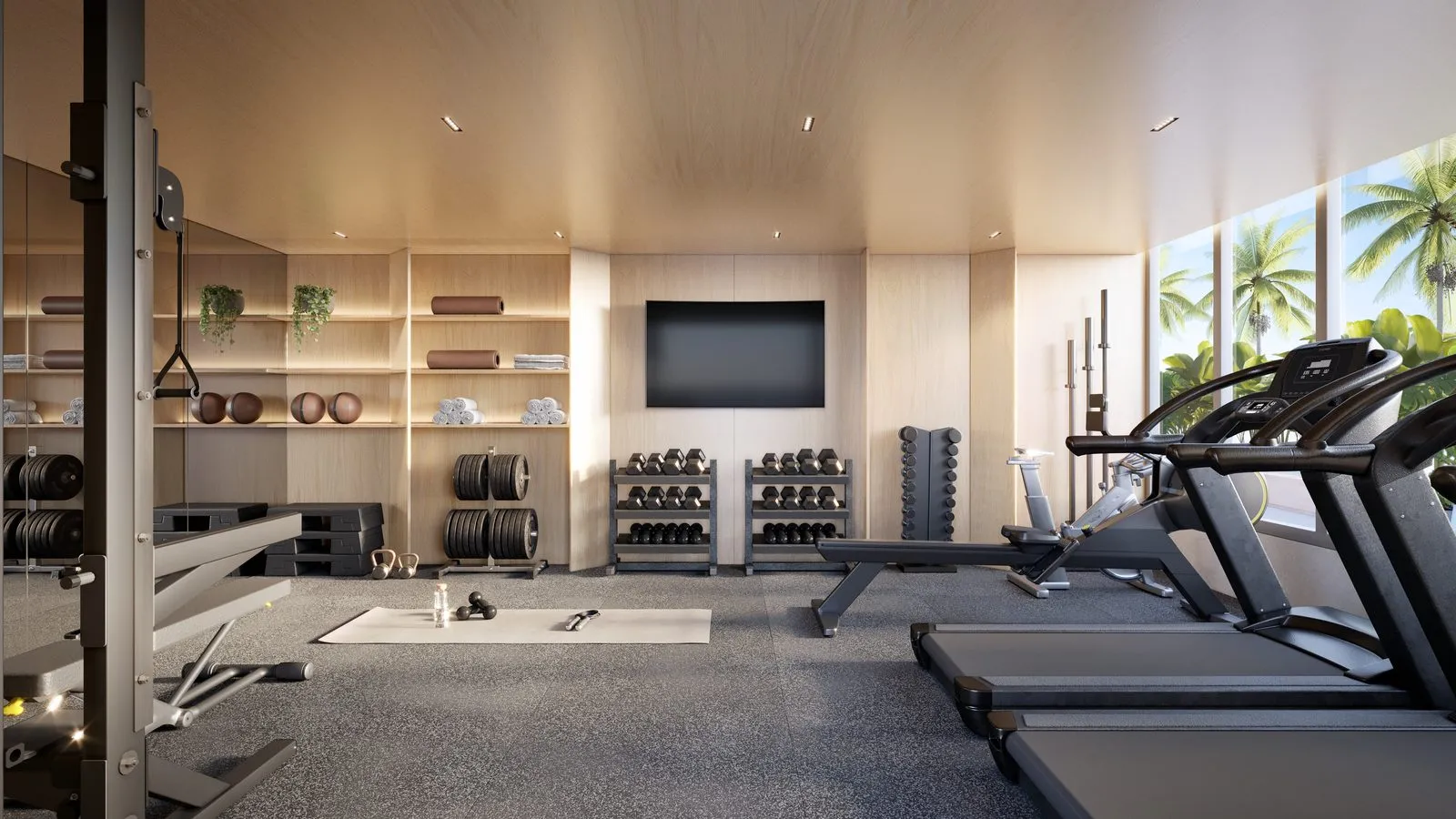
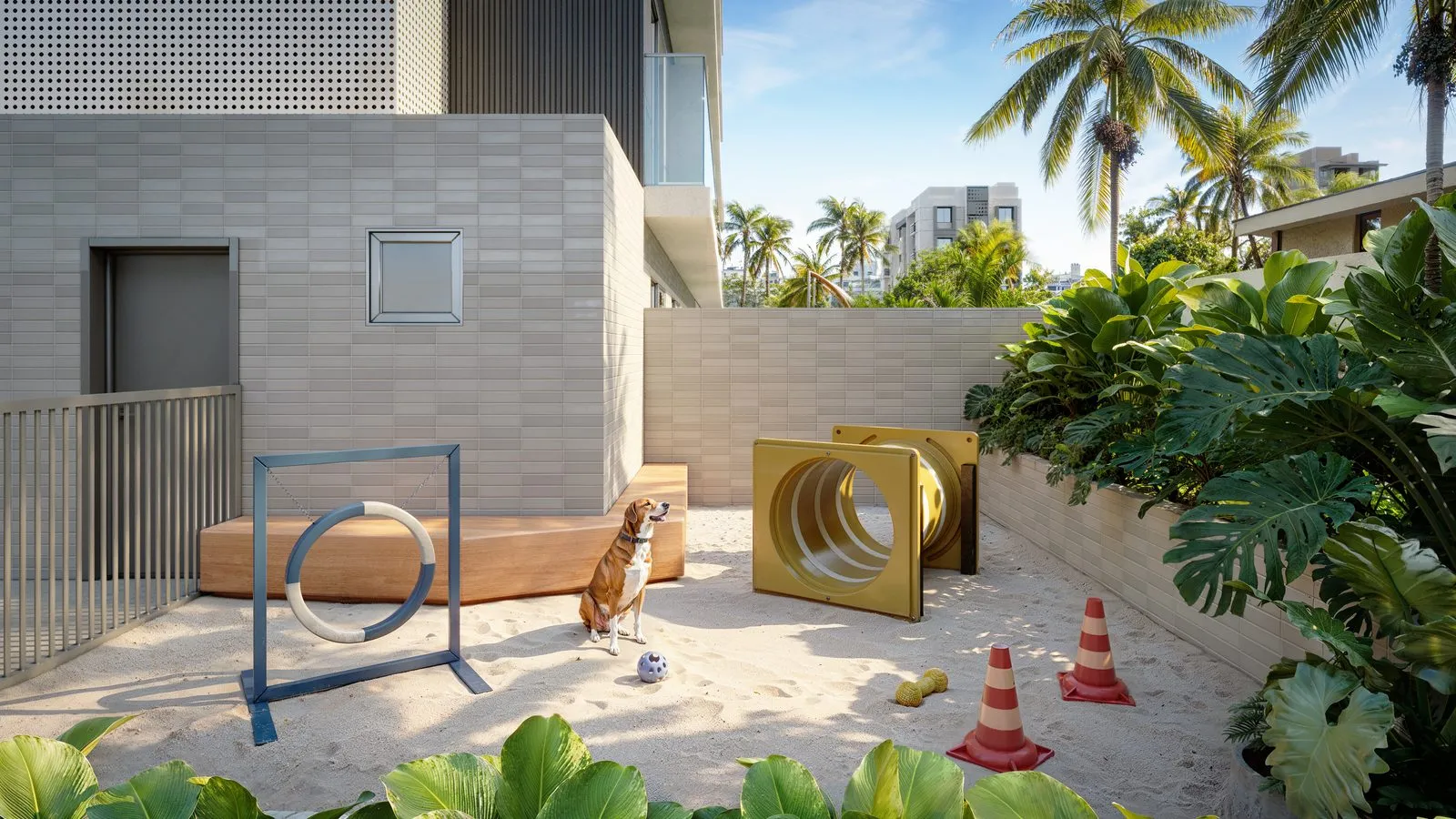
Built for unwinding
The rooftop is the building's heart: a lap pool, a zen space and four lounges with a view. Downstairs, a gym, playground and pet place. Short-term guests aren't just looking for somewhere to sleep, they're looking for somewhere to stay.
An architecture that understands the new urban way of living. Contemporary, timeless lines, and spaces designed to balance elegance and function.
Lumini is born from a proposal of reconnection: between city and nature, between design and well-being. Every outdoor space adds to a sensory experience.
Floor plans
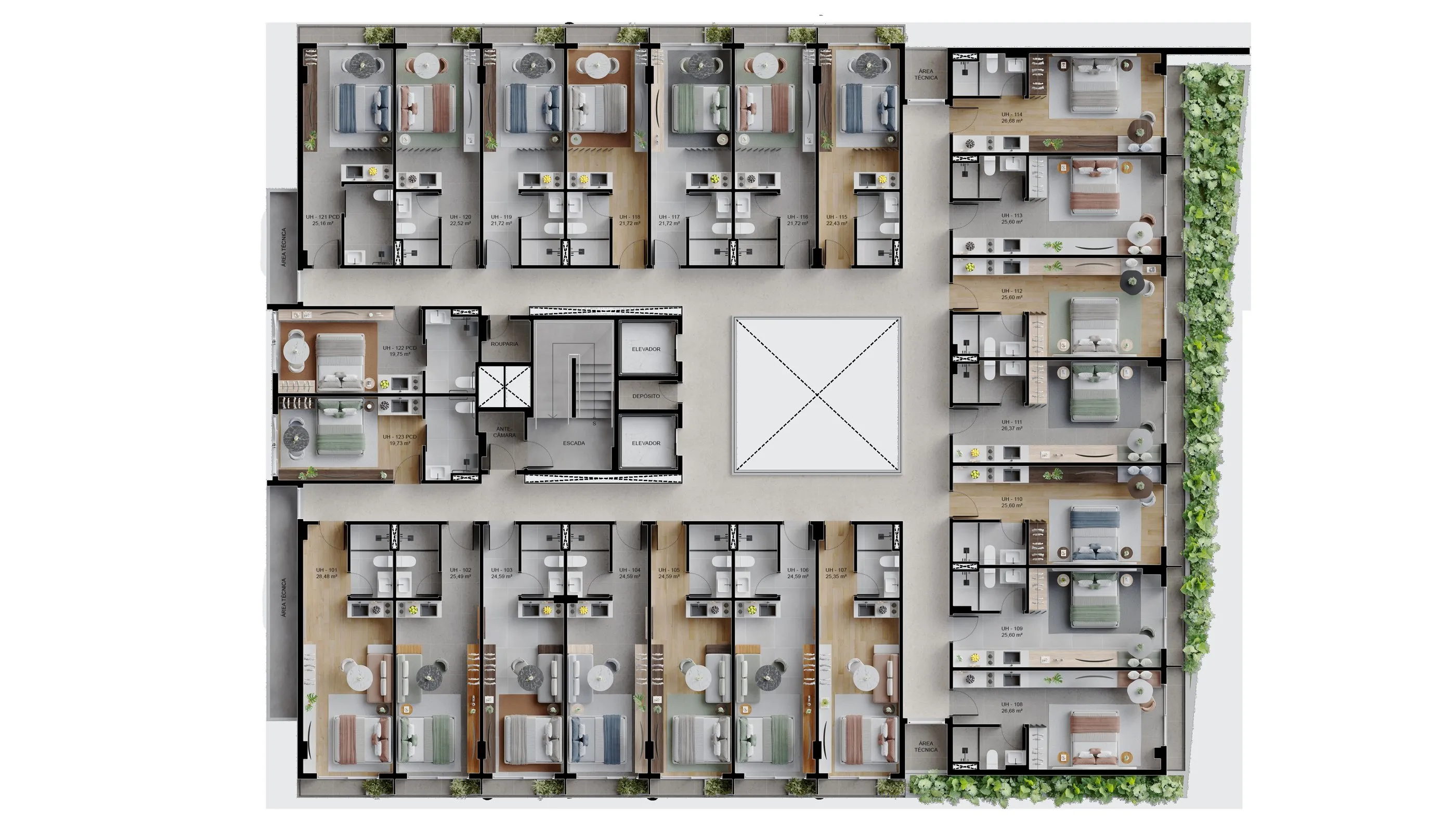
The side that gets the sun changes the price, and changes the nightly rate
+17,4%
On the 3rd floor, unit 309 gets the morning sun and costs 17.4% more per square meter than unit 301, which faces south. The floor plan is identical. What changes is which way the balcony faces.
Every floor
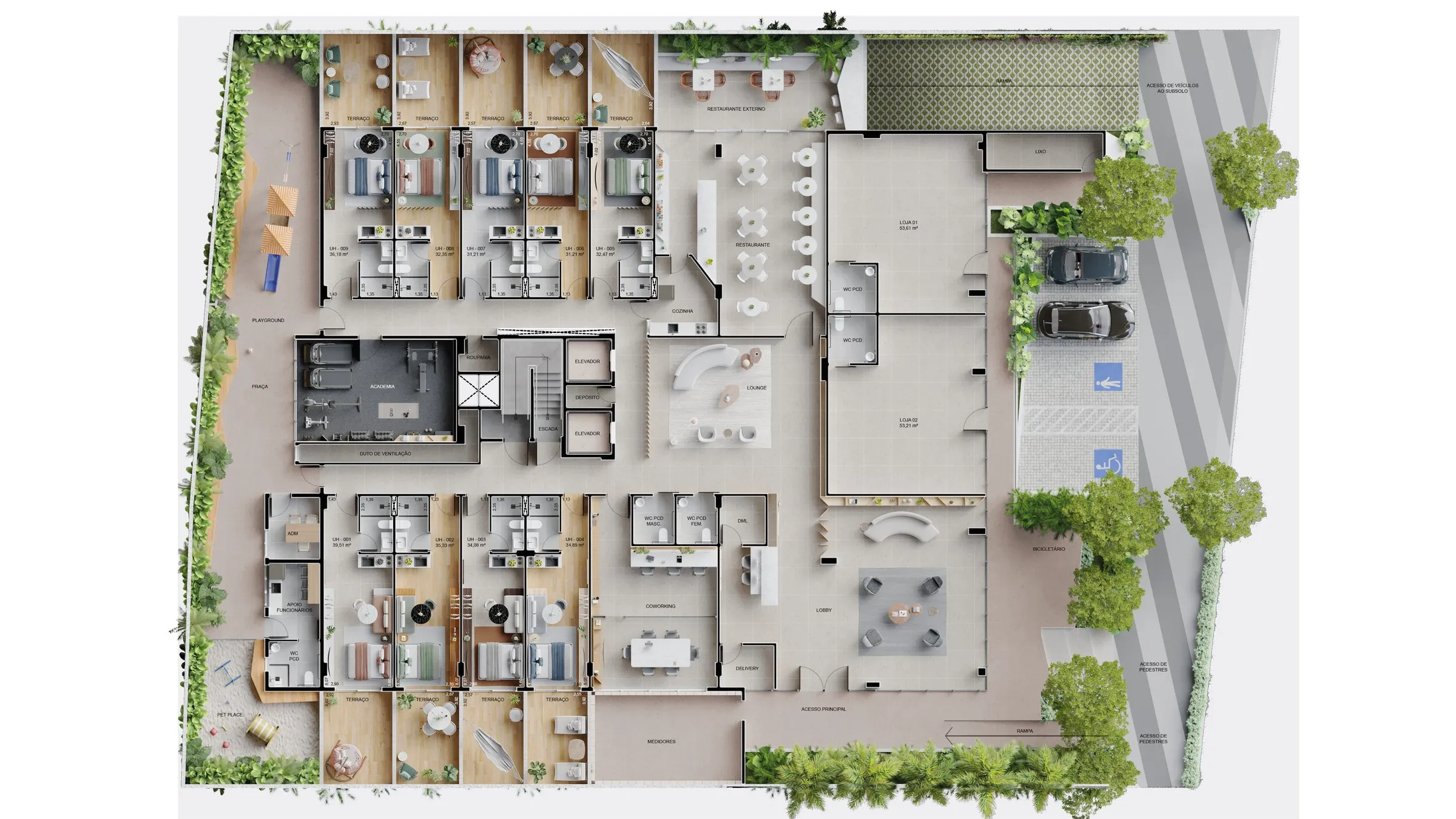 Ground floor
 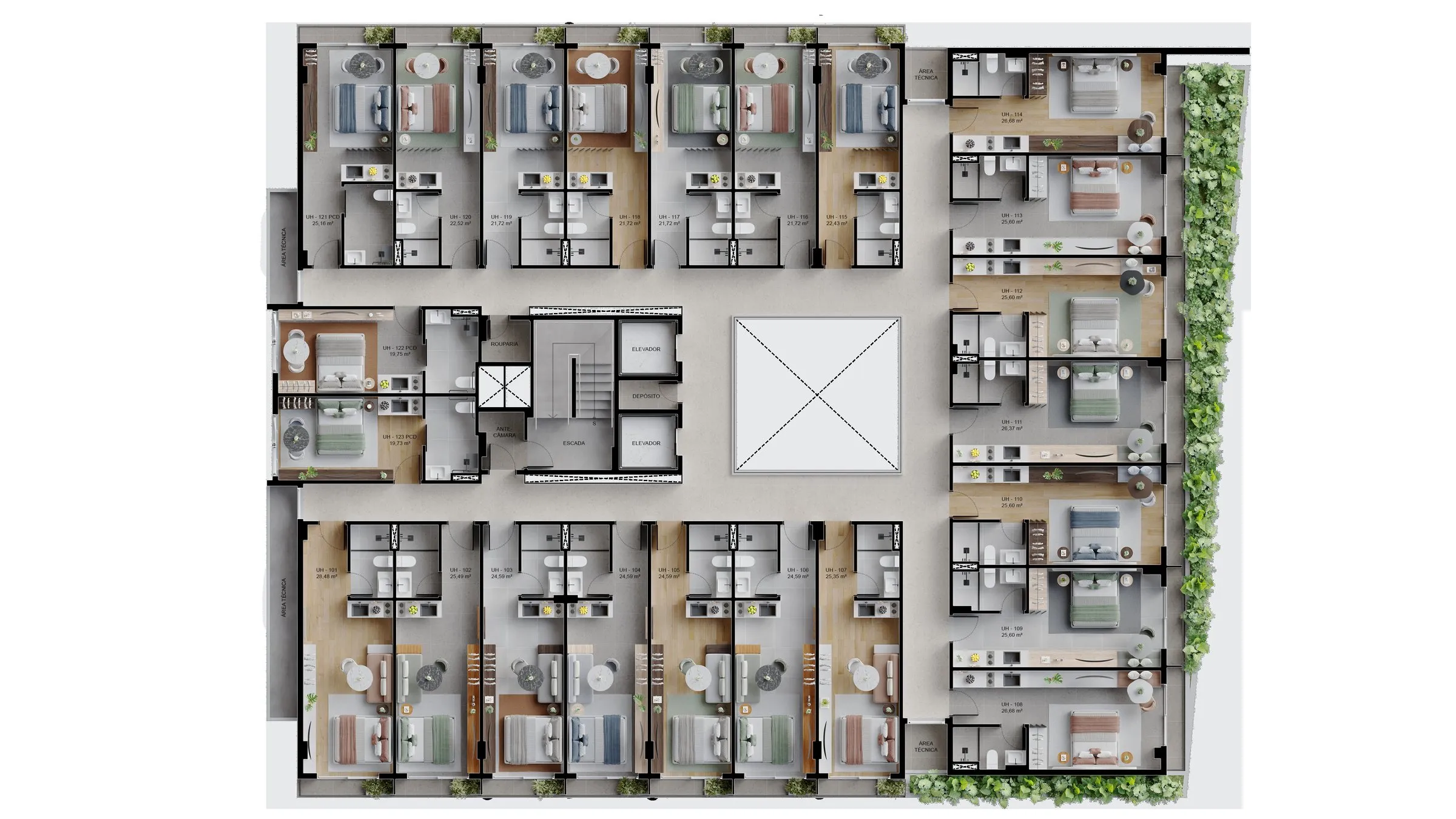 1st floor
 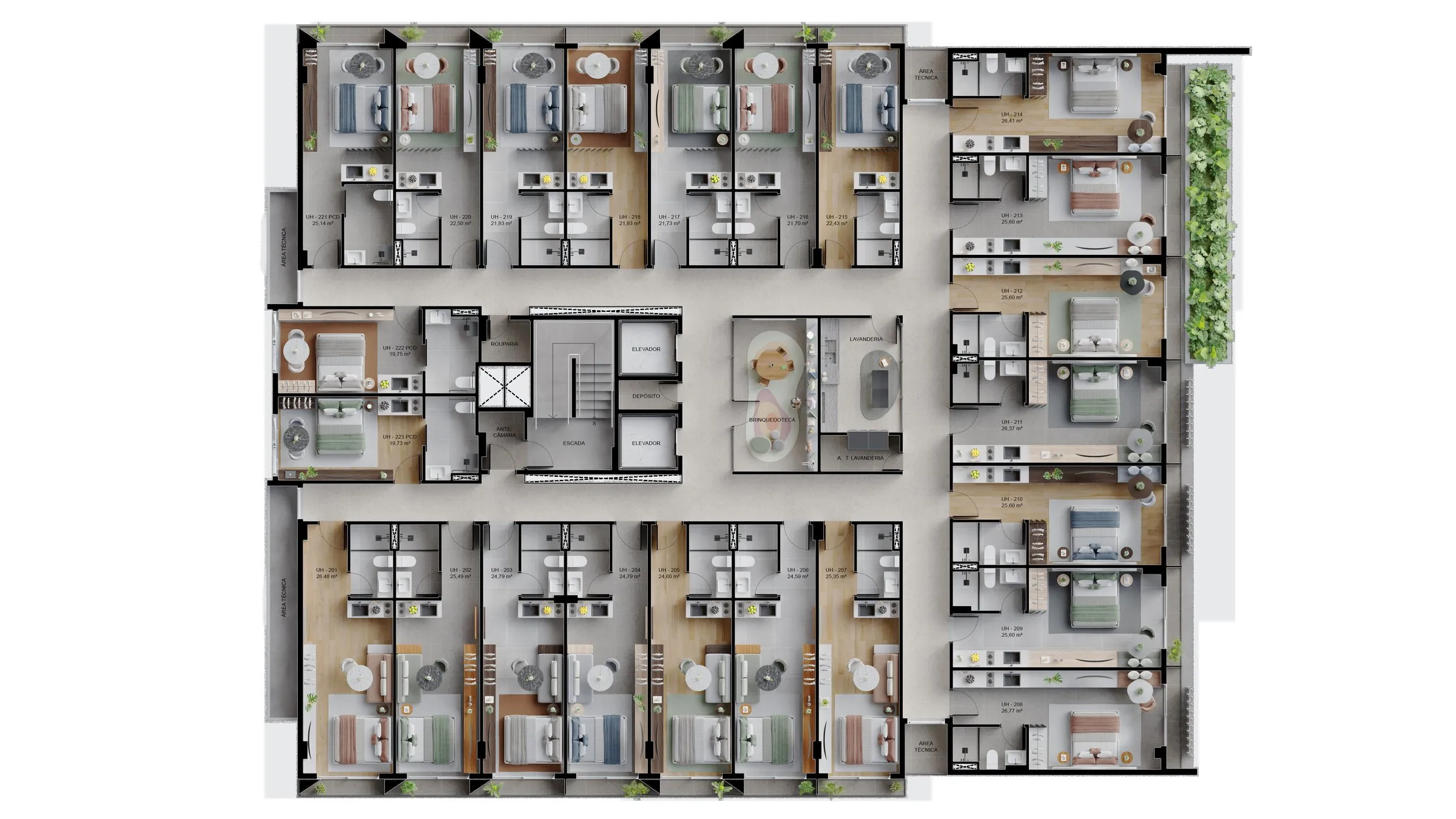 2nd floor
 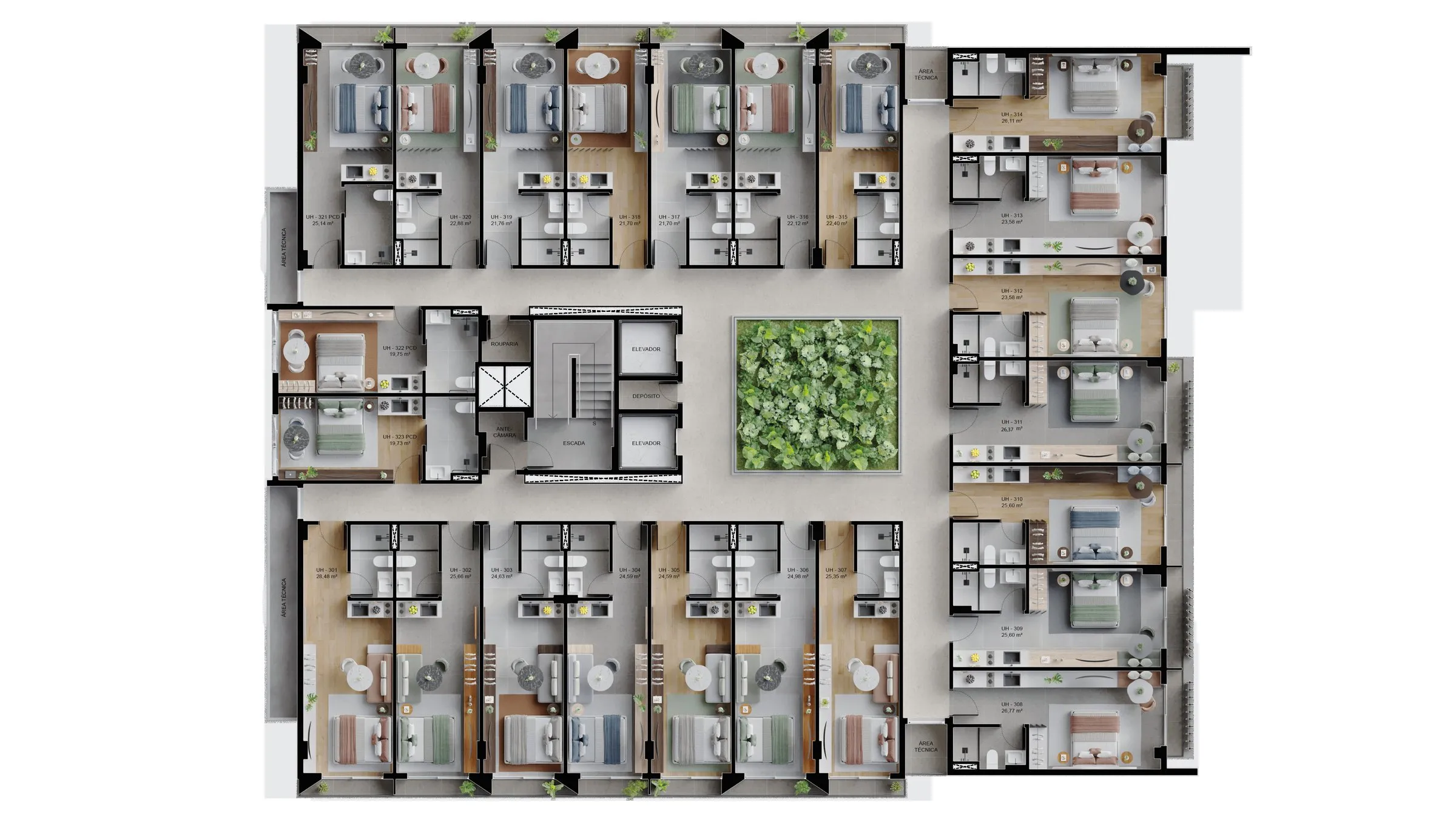 3rd floor
 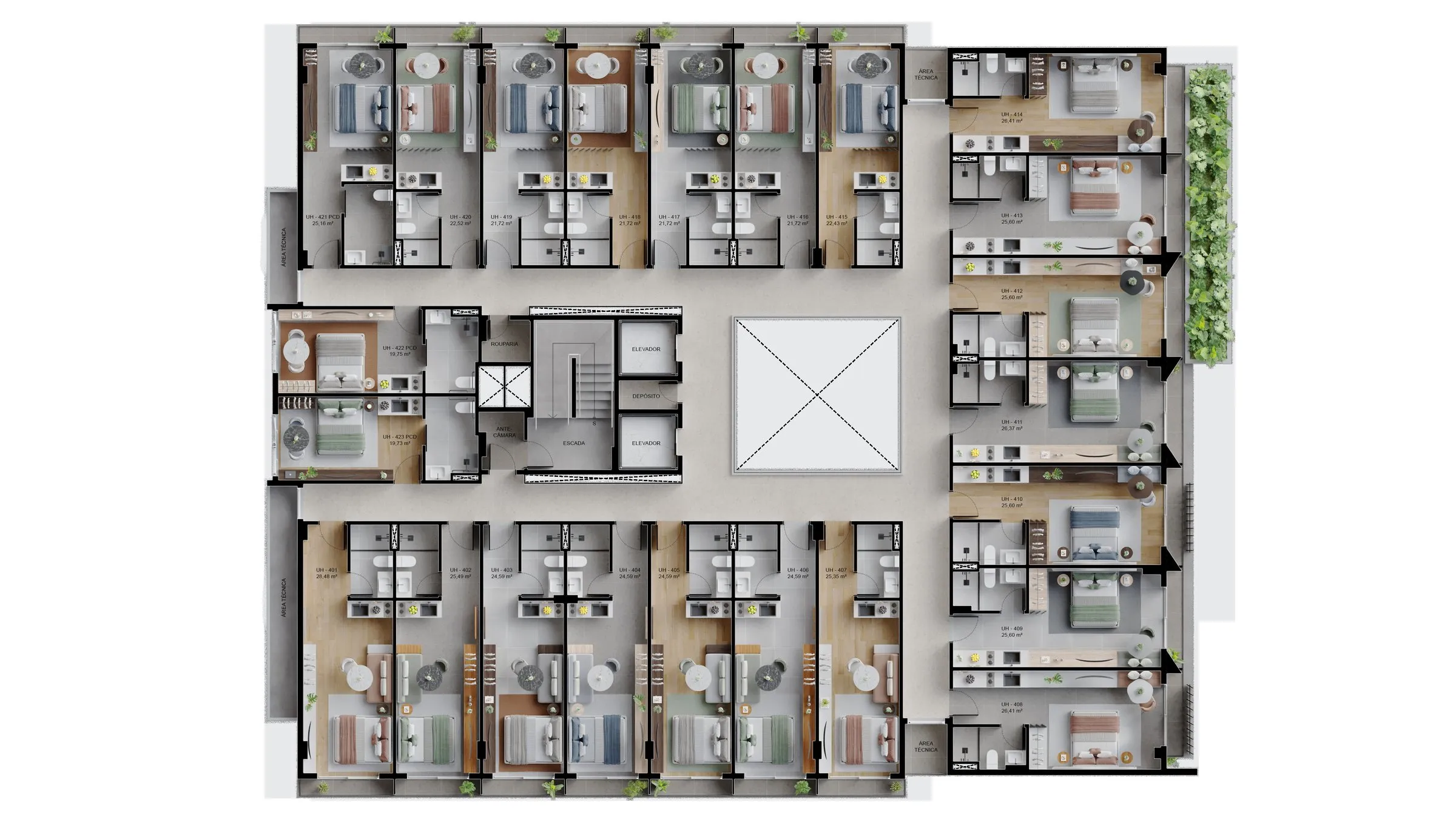 4th floor
 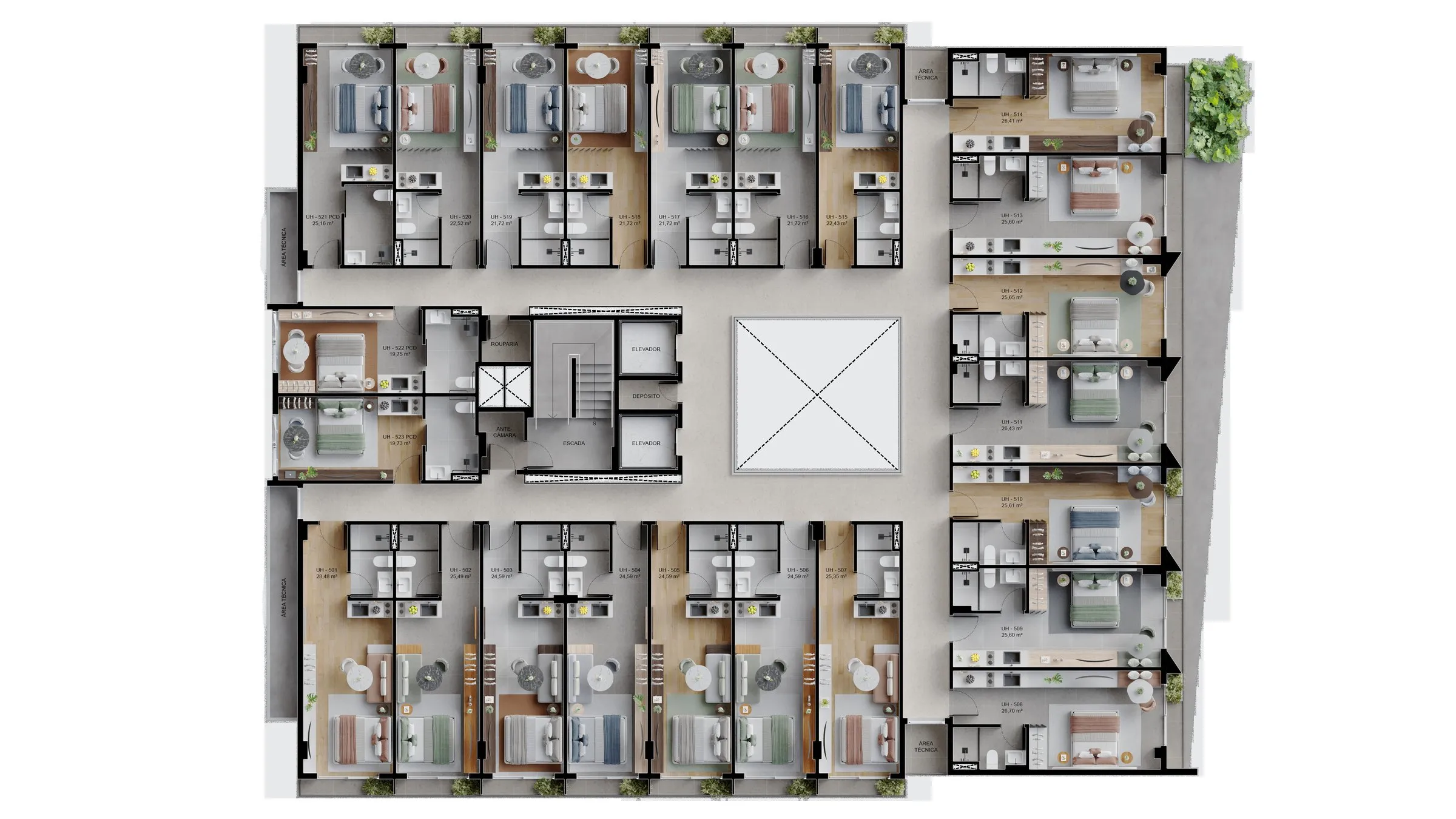 5th floor
 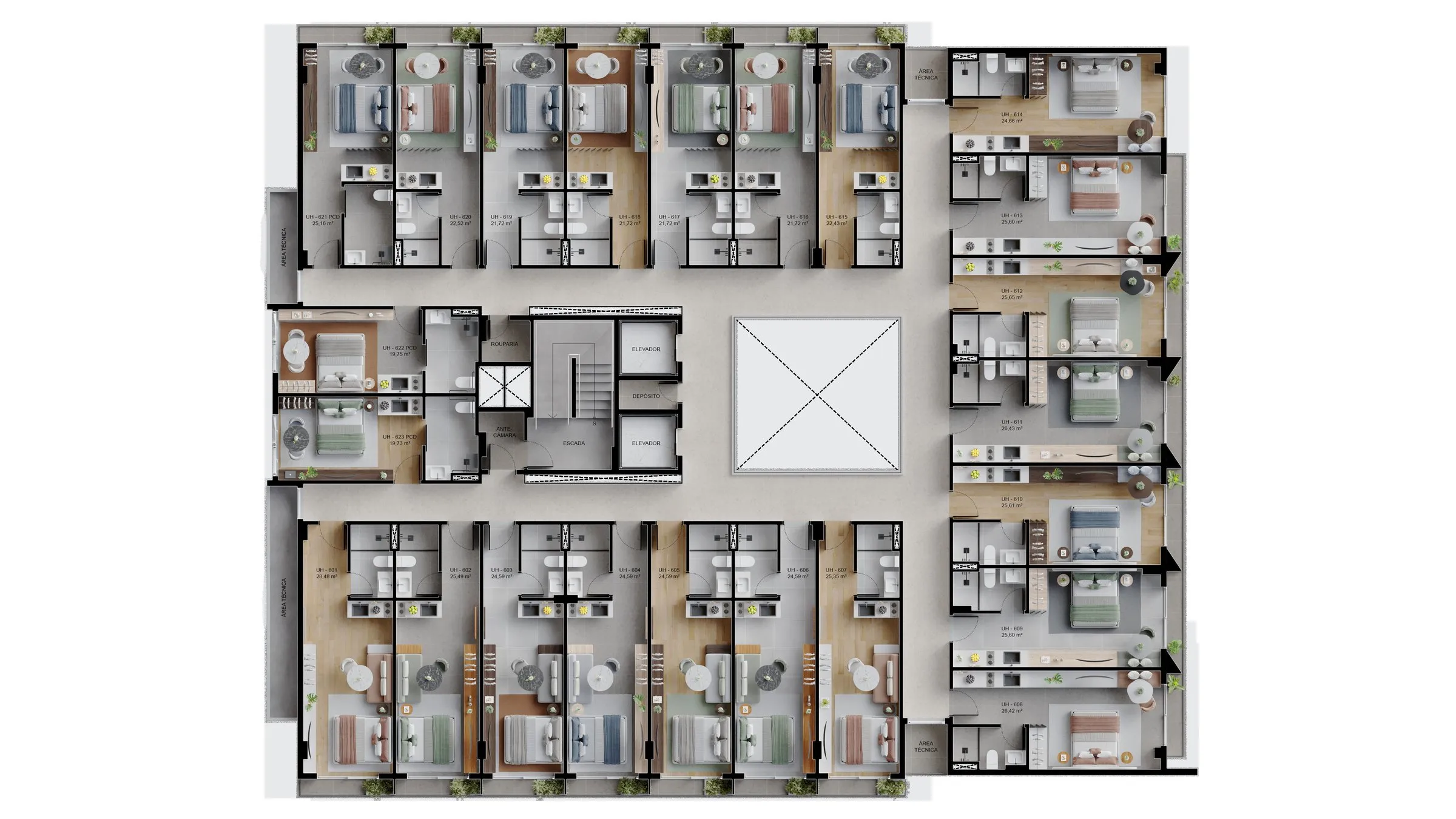 6th floor
 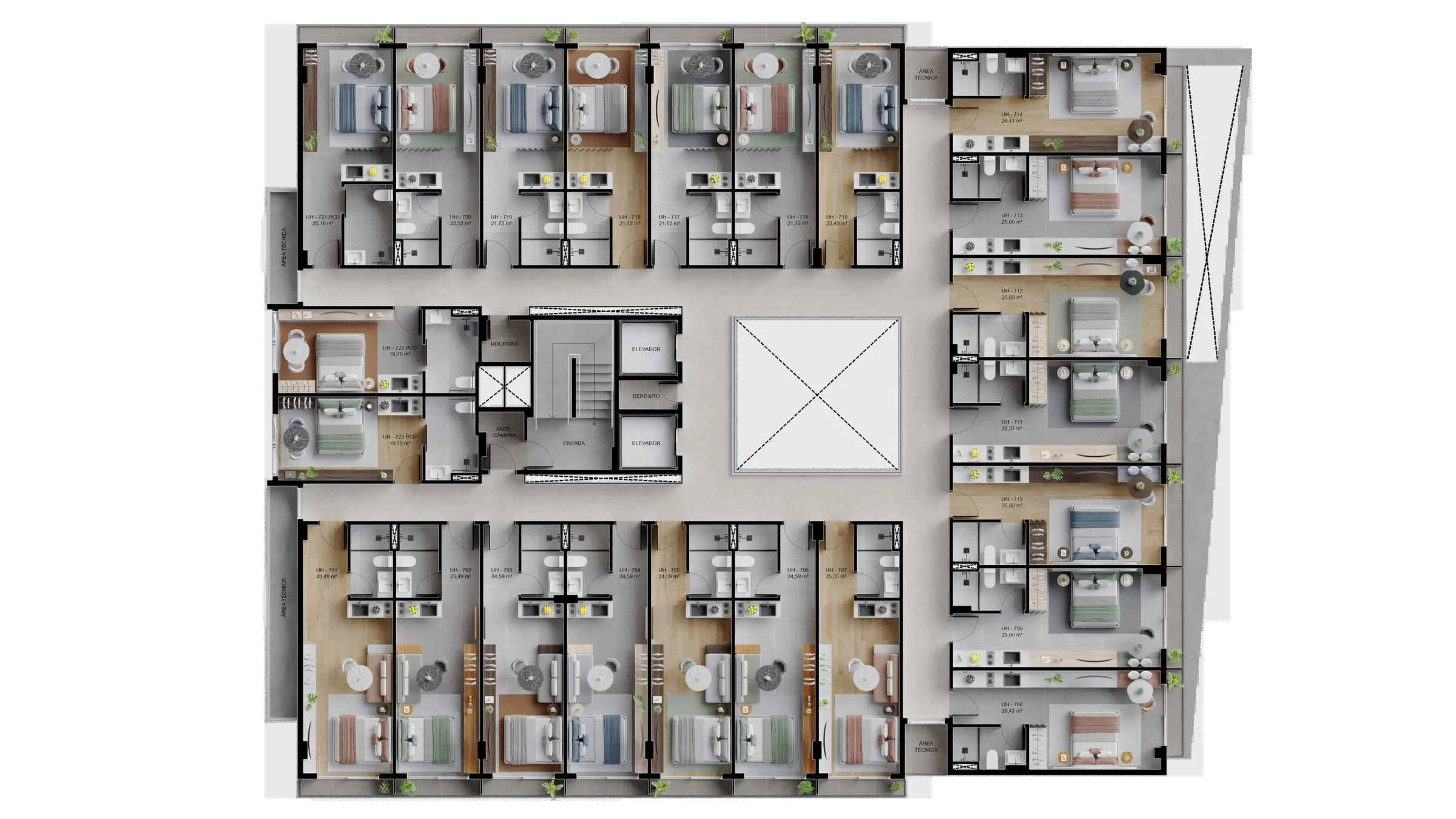 7th floor
 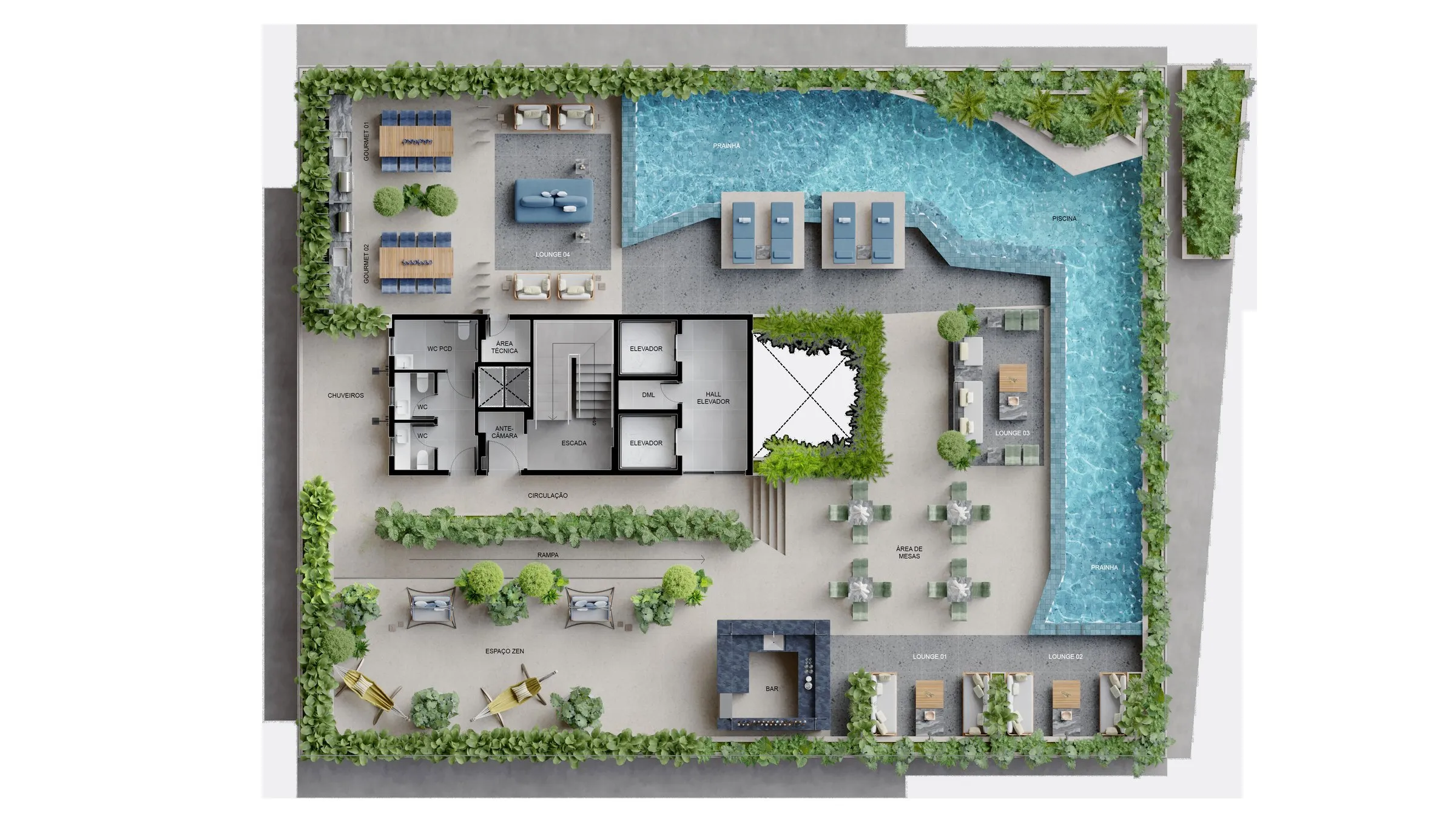 Rooftop
 Development registration R-2-165.147 · Handover expected April 2029
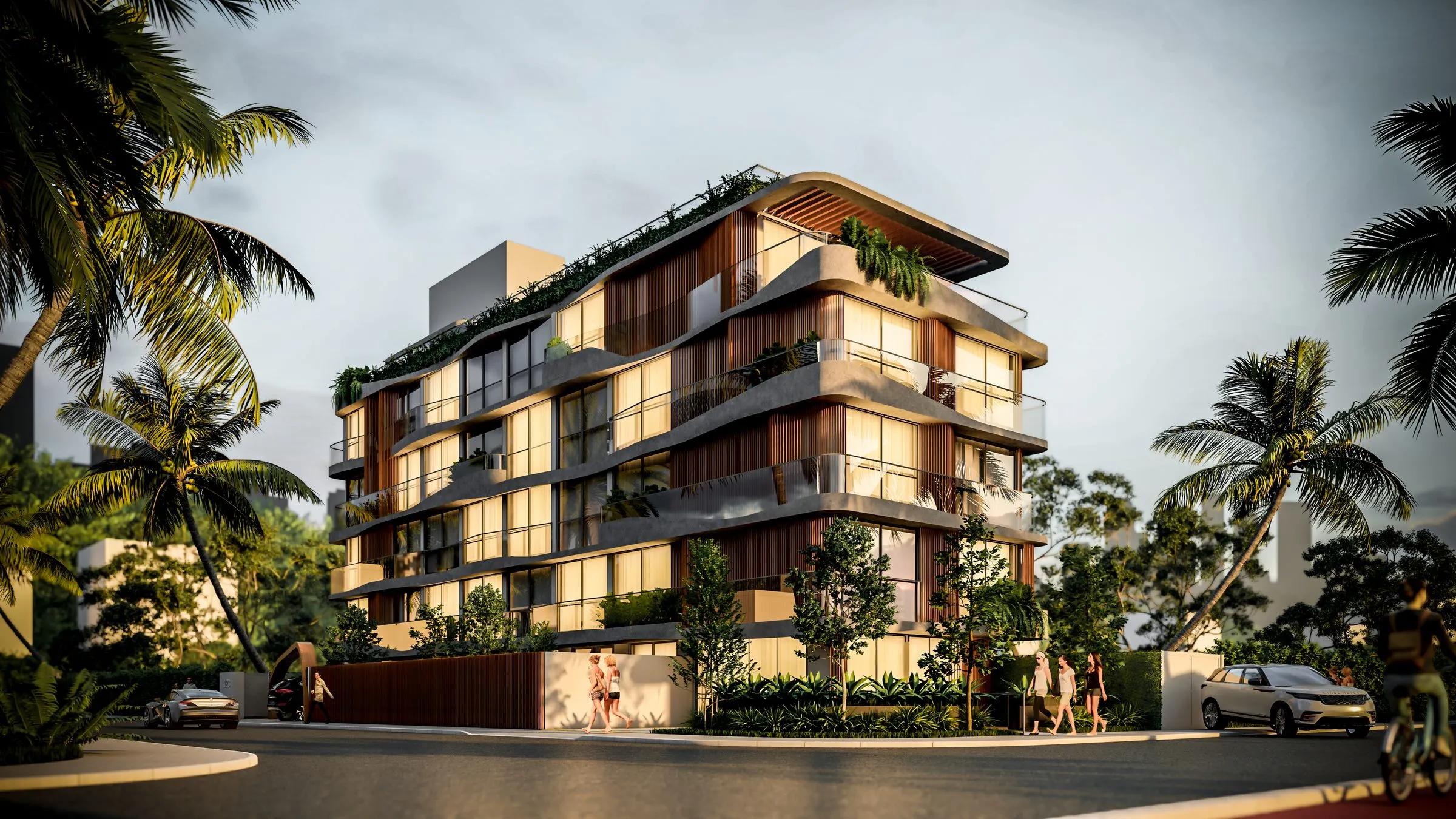
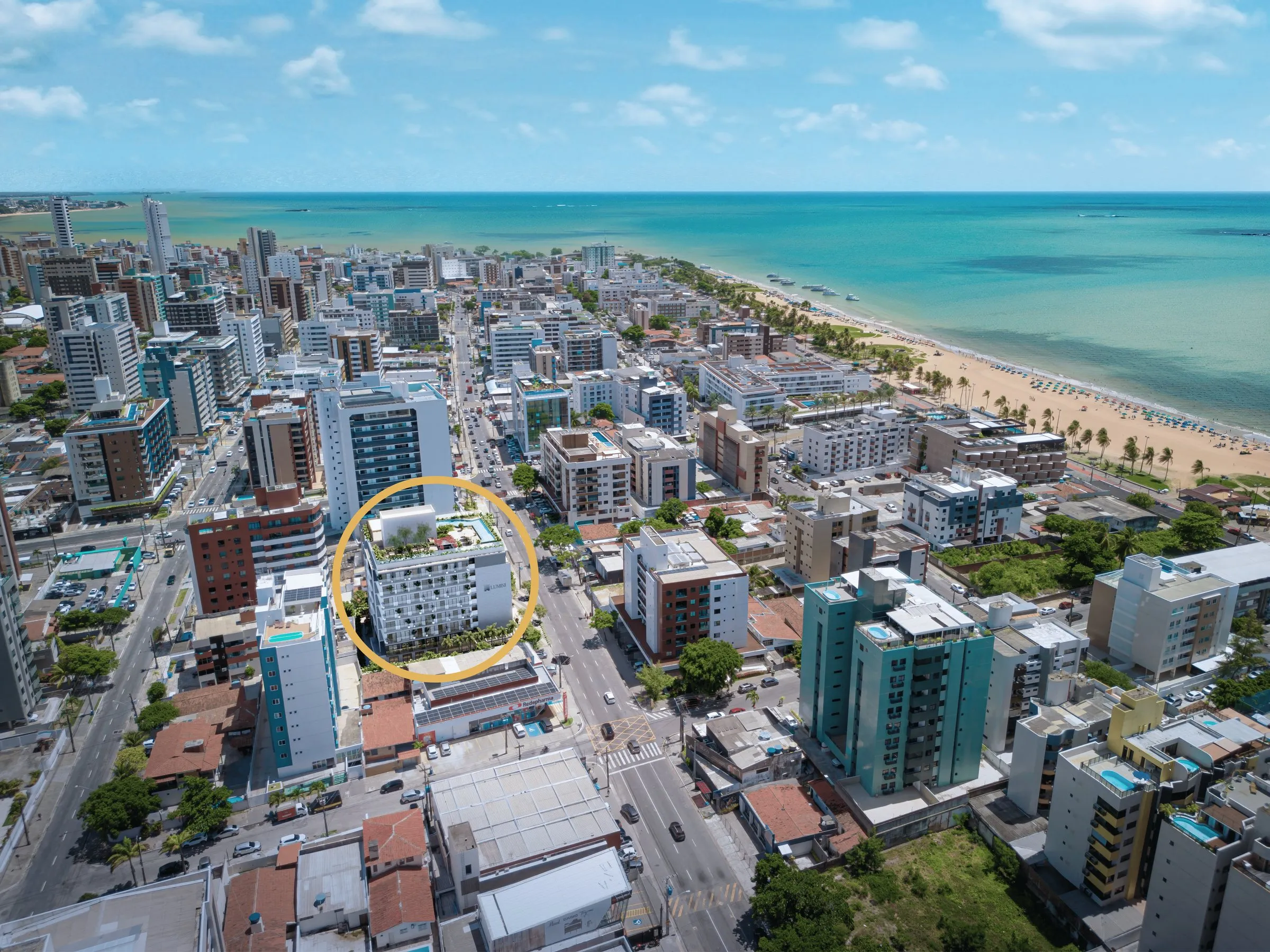
Av. Cabo Branco. The building faces the ocean directly.
No one will ever build another building on the first block. An address like this isn't created, it just changes hands.
The thesis
No renovation adds an ocean view later, and the avenue's first block is already built out end to end: an address like this only changes hands. That's where the long-term gain comes from, in the property's appreciation. Until handover, R$ 1,621.22 a month, straight to the developer.
Condition of the August 2026 price table. The developer updates the table periodically.
R$ 73,000≈ US$ 15
a year is the average revenue of a studio rented short-term in Cabo Branco: R$ 303 average nightly rate, 73% occupancy, 91 comparables monitored.
R$ 3,857≈ US$ 0
a month is what's left over on average for short-term rentals, after condo fees, management, property tax and maintenance. More than twice this apartment's installment.
73%
average occupancy in the market, measured across 91 units. The well-run ones hit 86%, 93%, 95%, and that's the group a well-managed beachfront property competes in.
Location, and what it's worth
First block of Av. Cabo Branco, facing the ocean, with nothing between the building and the sand. The infinity pool sits on the rooftop, facing the sea, and the ground floor has a board and beach-chair storage room plus a bike rack. Guests wake up, go downstairs, and they're already at the beach.
Leisure area
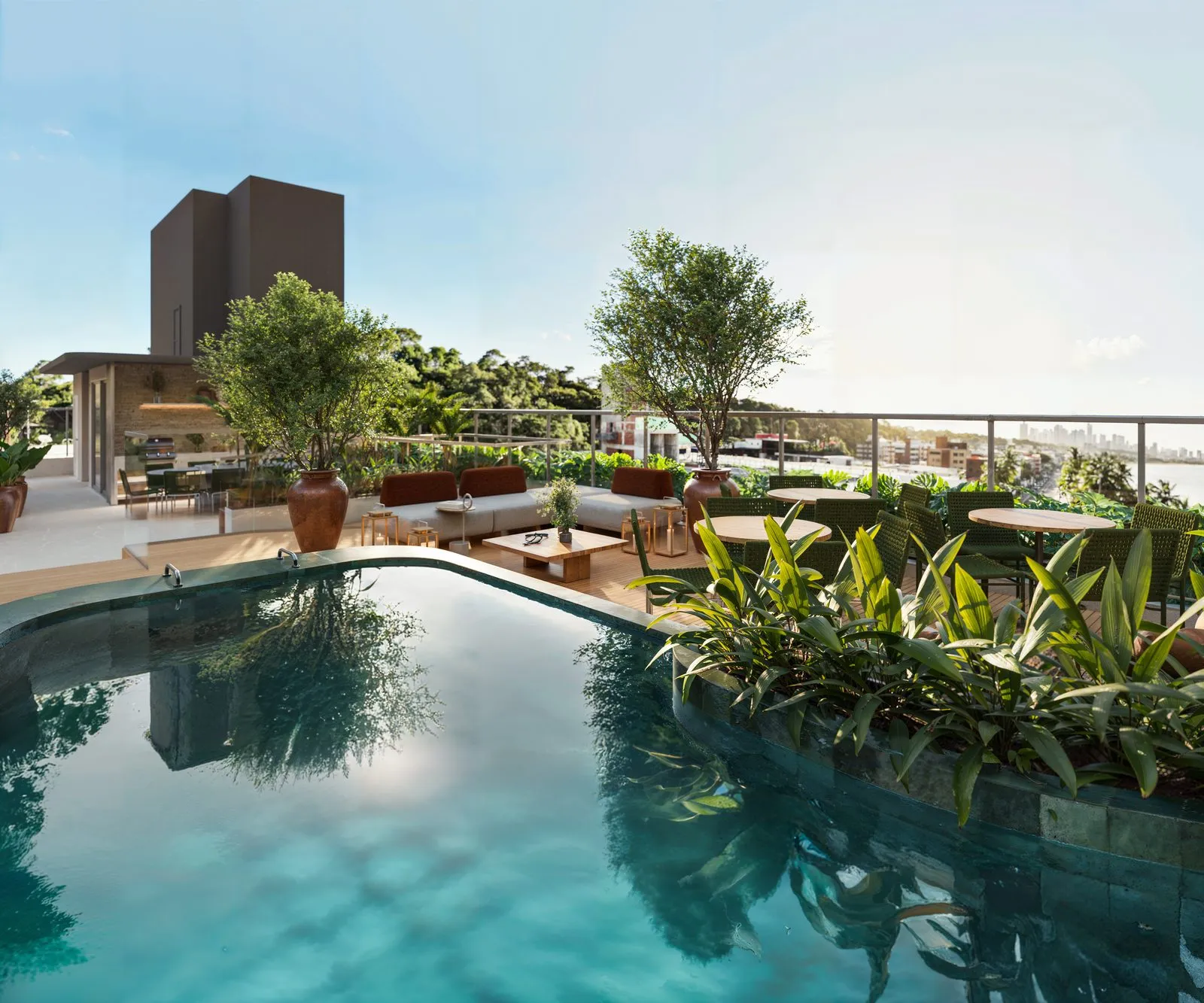
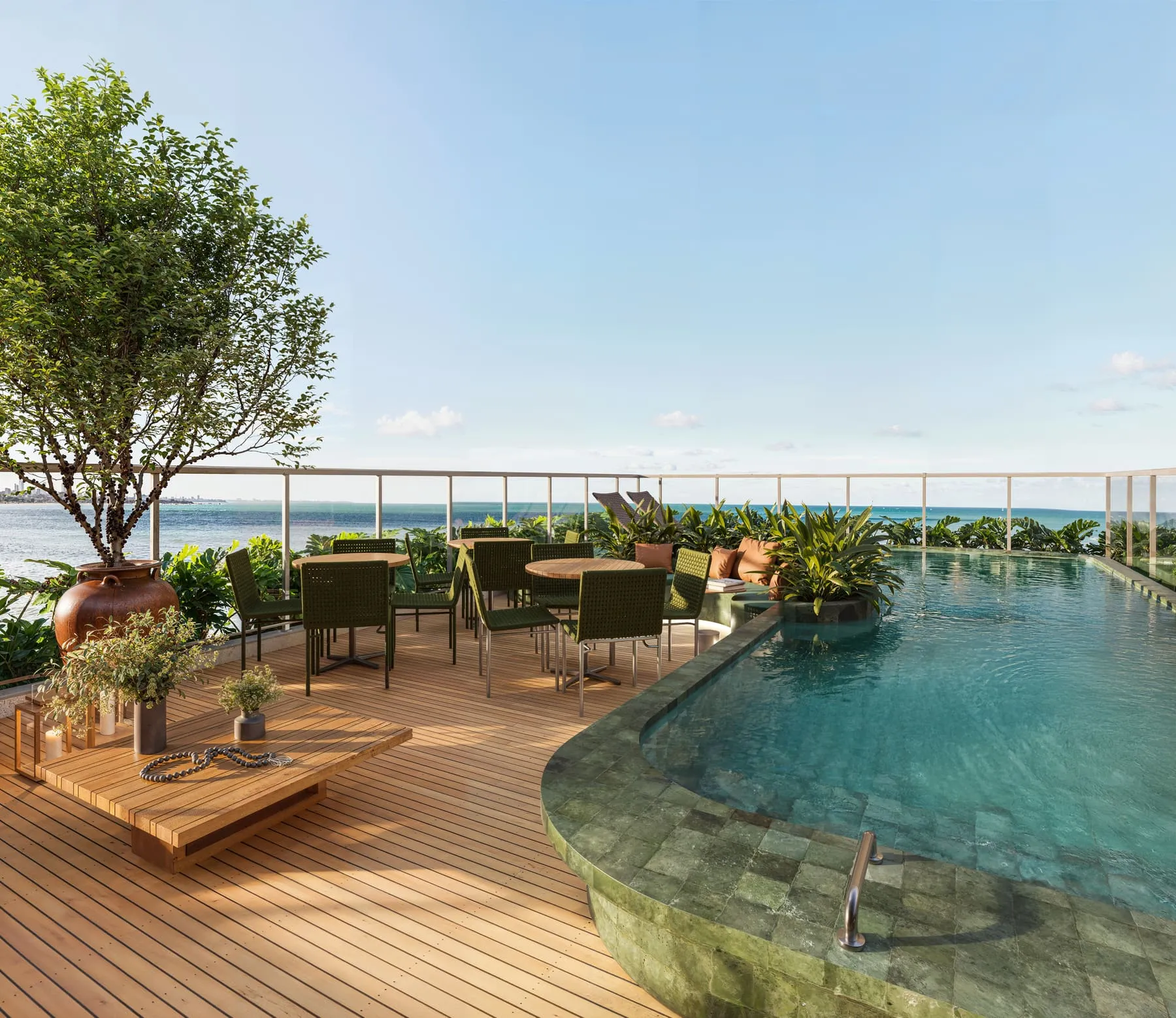
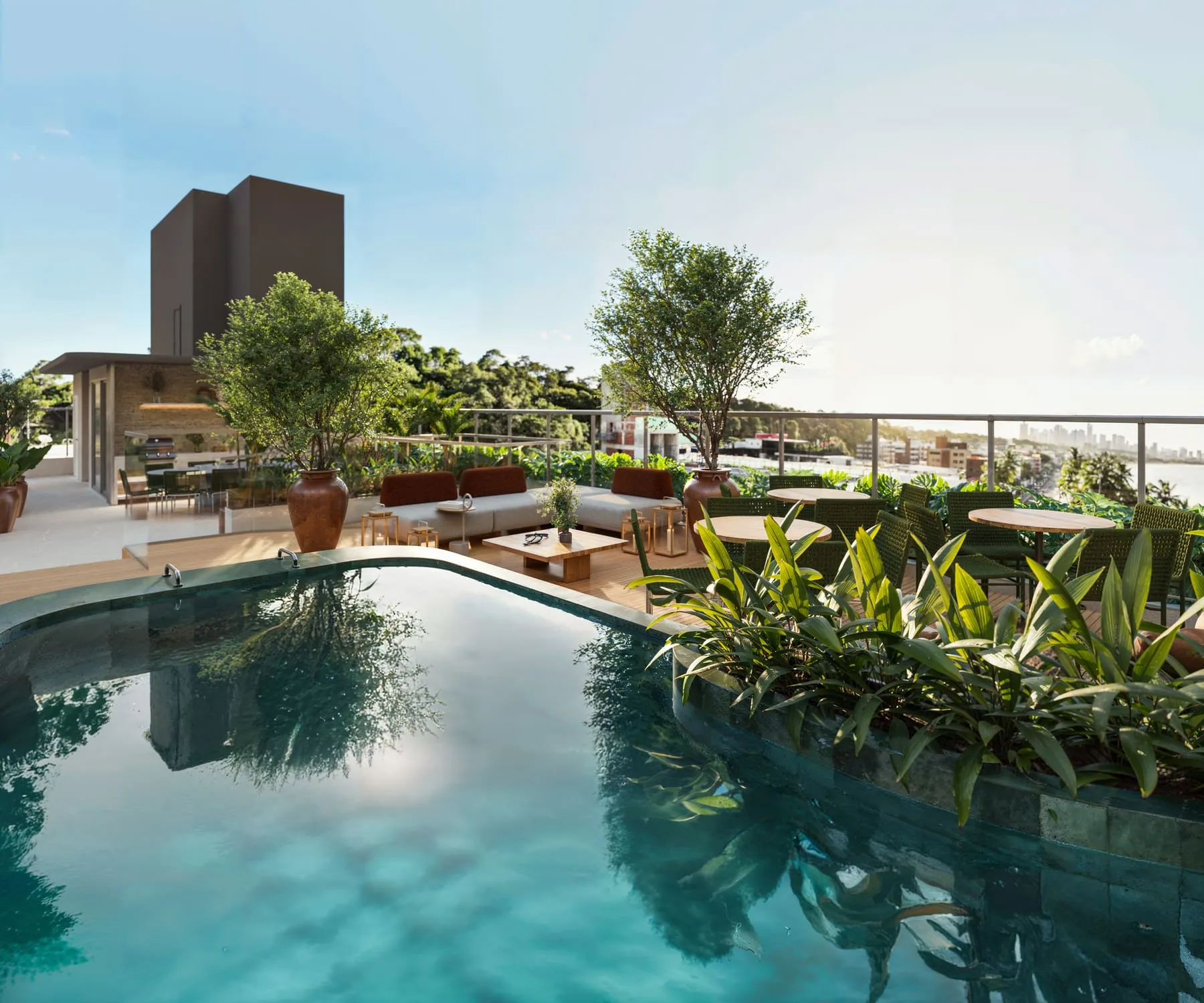
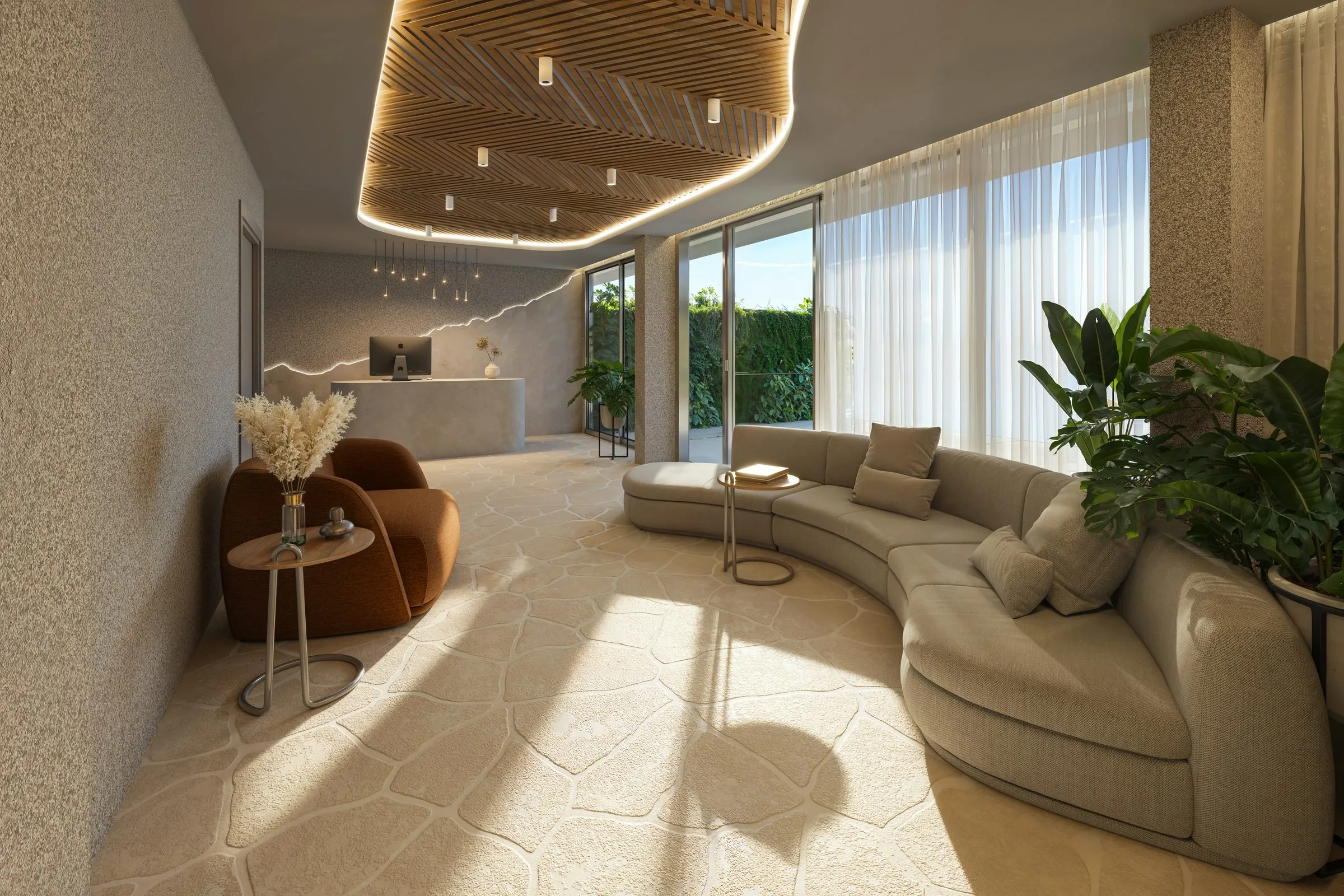
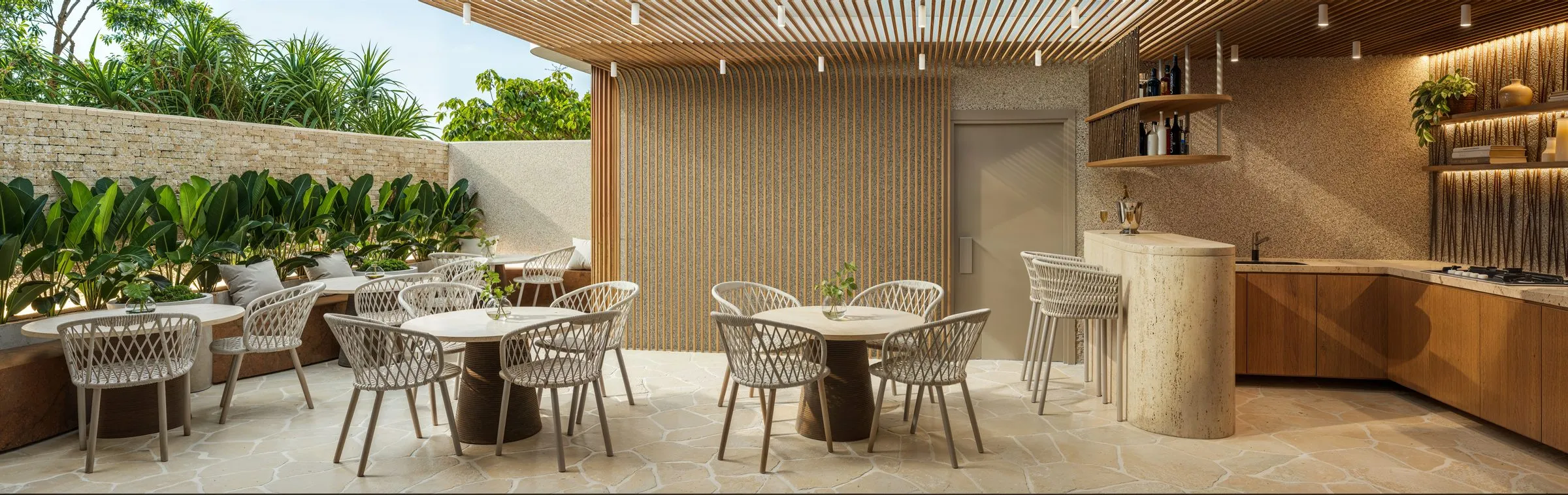
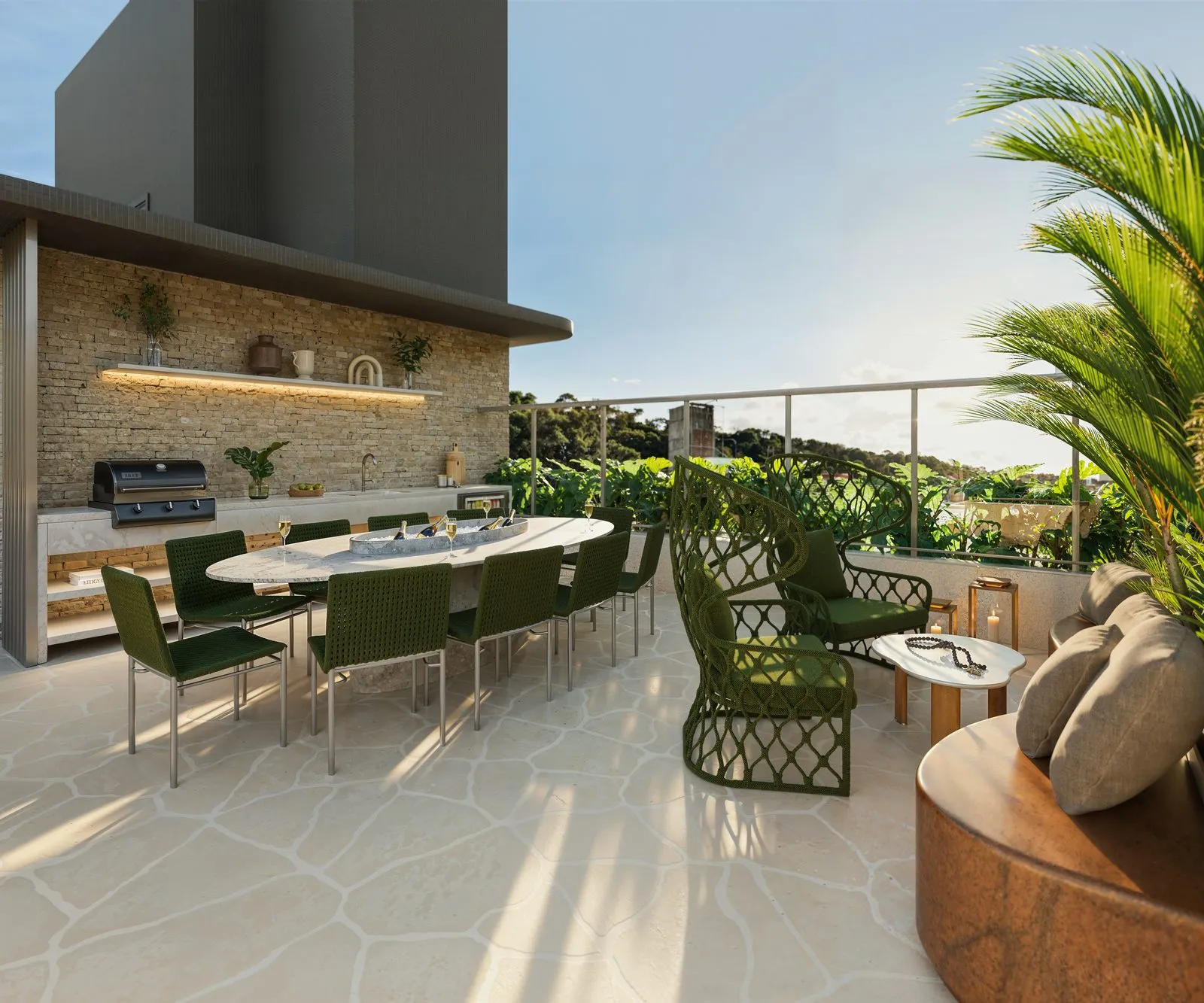
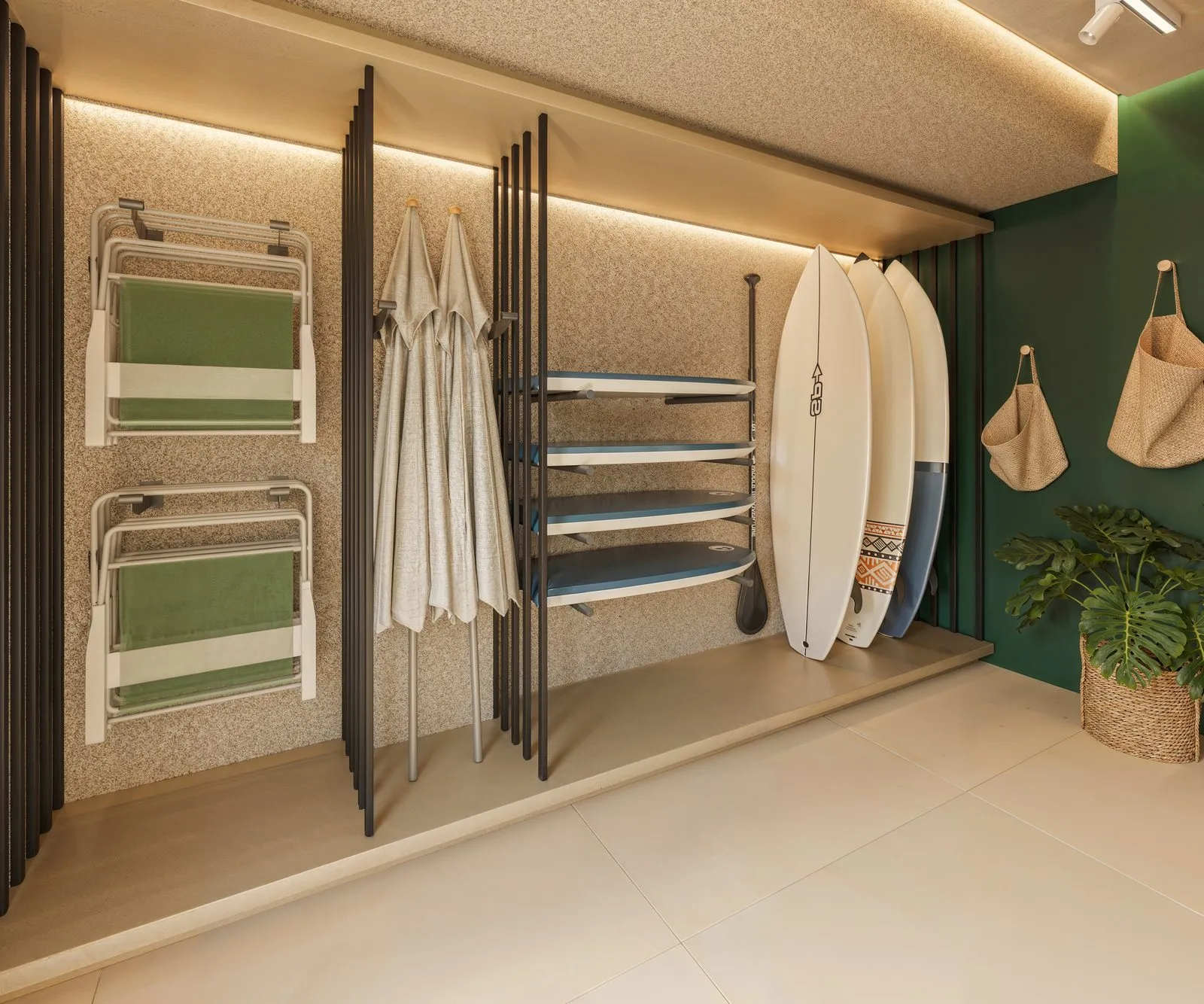
Built for unwinding
Infinity pool on the rooftop, facing the ocean, with a gourmet area and lounge alongside. Downstairs, board and beach-chair storage, plus a bike rack. It's a building designed for people who wake up and head to the sea.
Floor plans
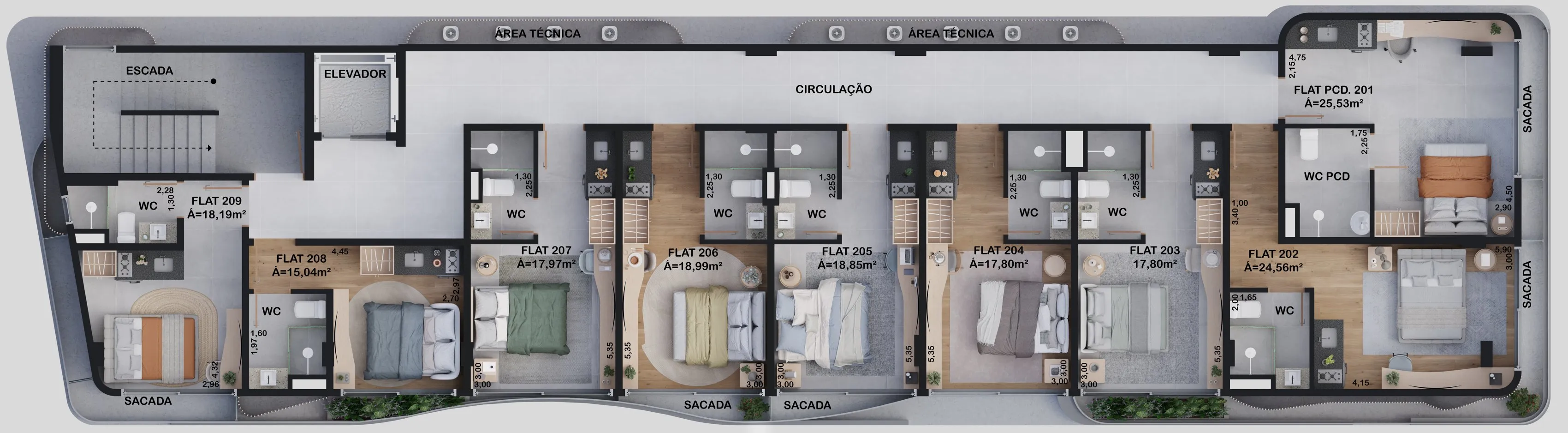
The side that gets the sun changes the price, and changes the nightly rate
+20,6%
On the 2nd floor, unit 201 gets the morning sun and costs 20.6% more per square meter than unit 206, which faces south. Same building, same floor. Whoever wakes up to sun on the balcony doesn't pay the same price, and doesn't charge the same nightly rate either.
Every floor
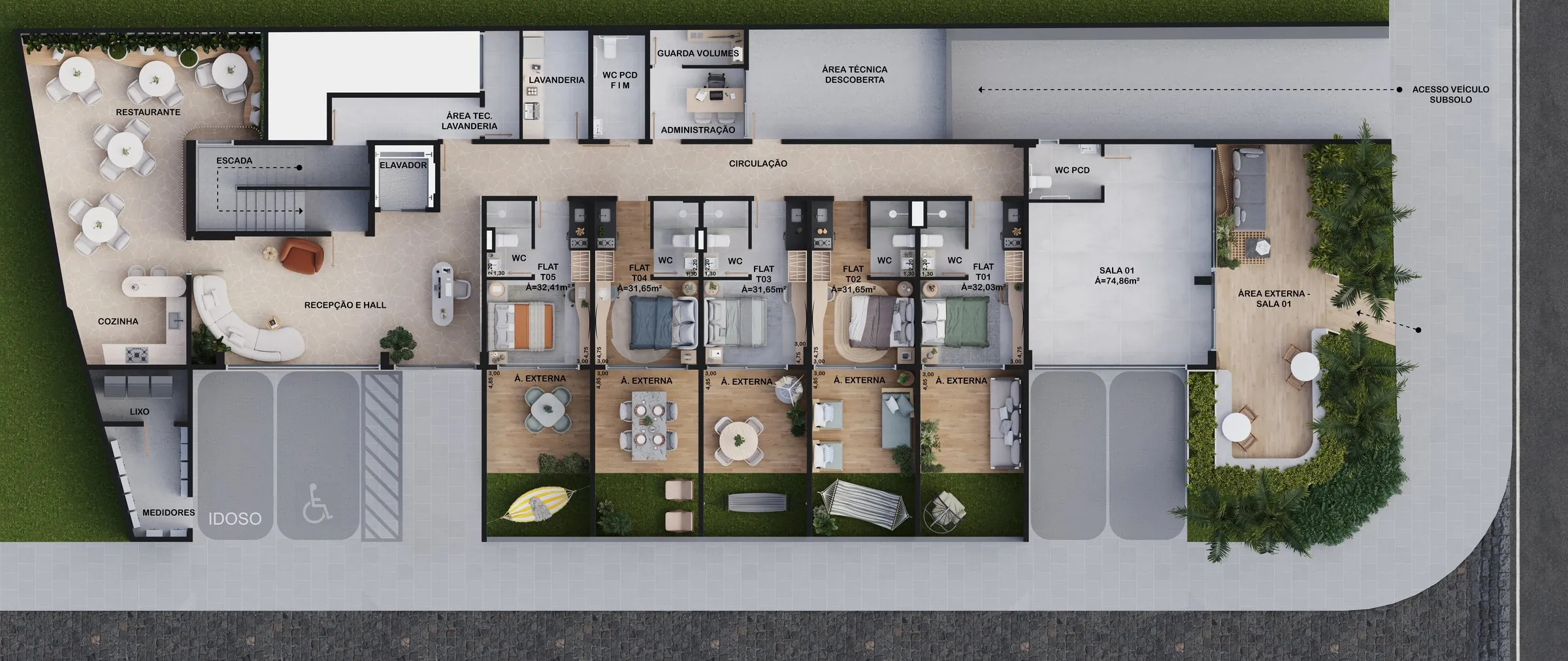 Ground floor
 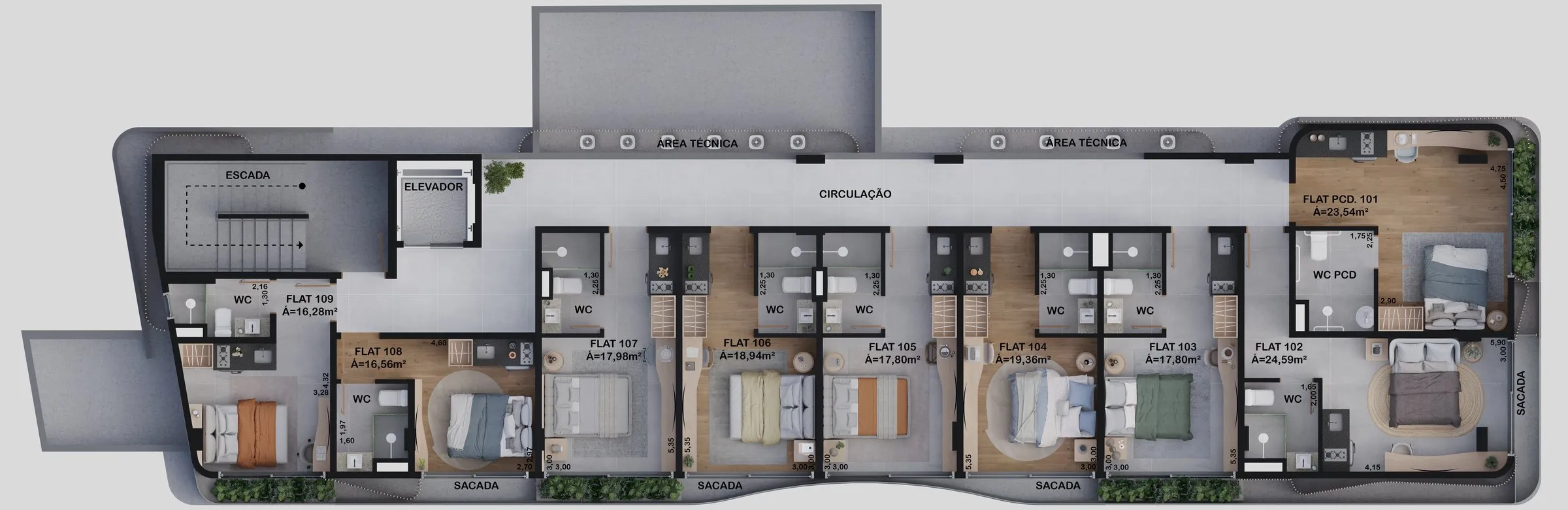 1st floor
 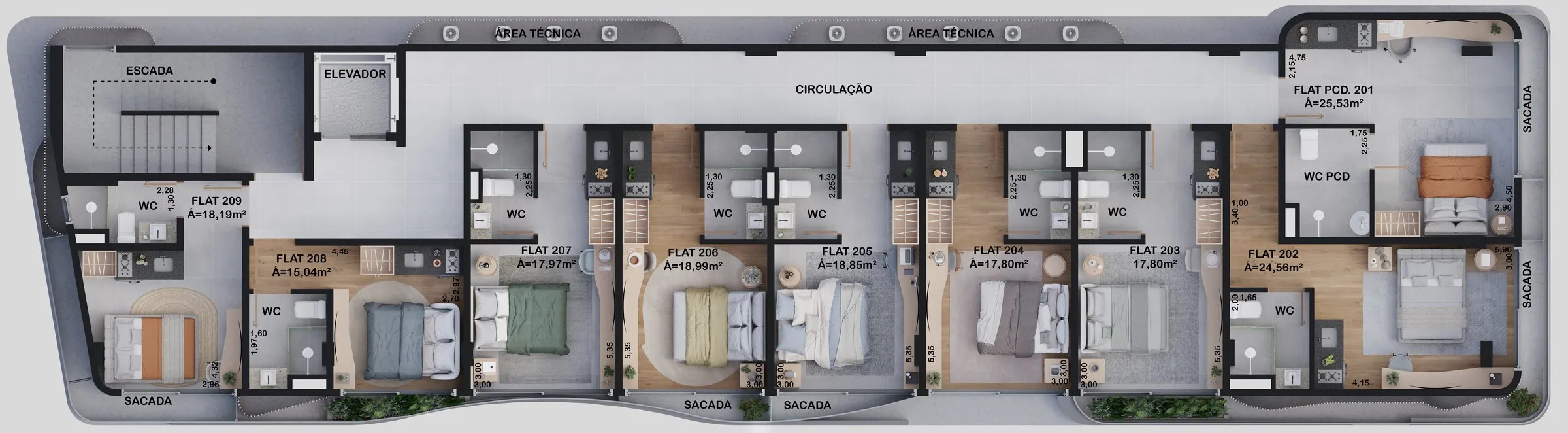 2nd floor
 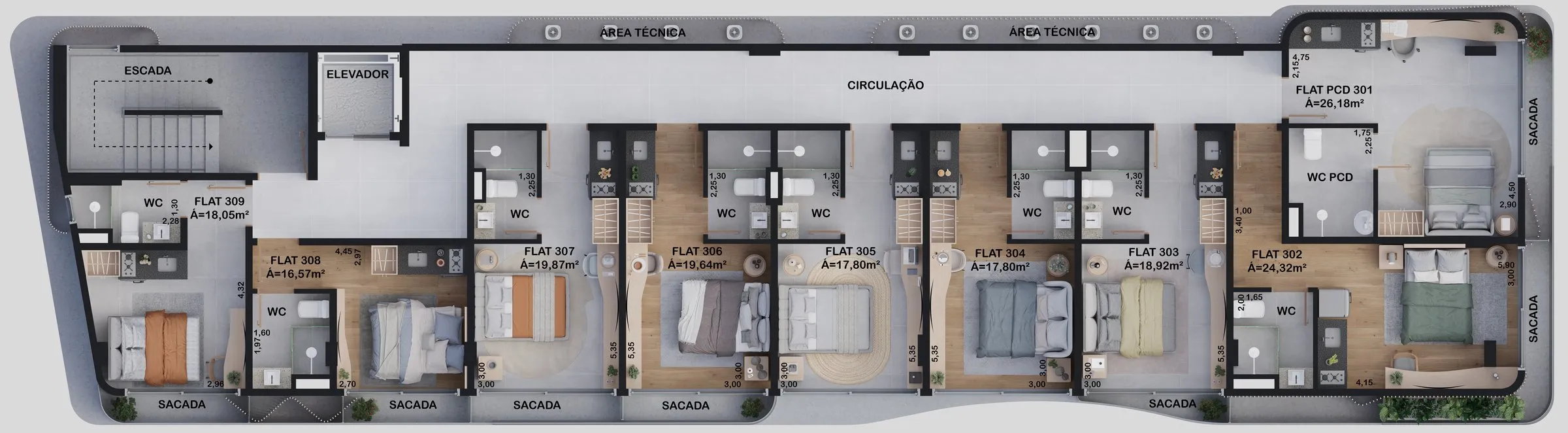 3rd floor
 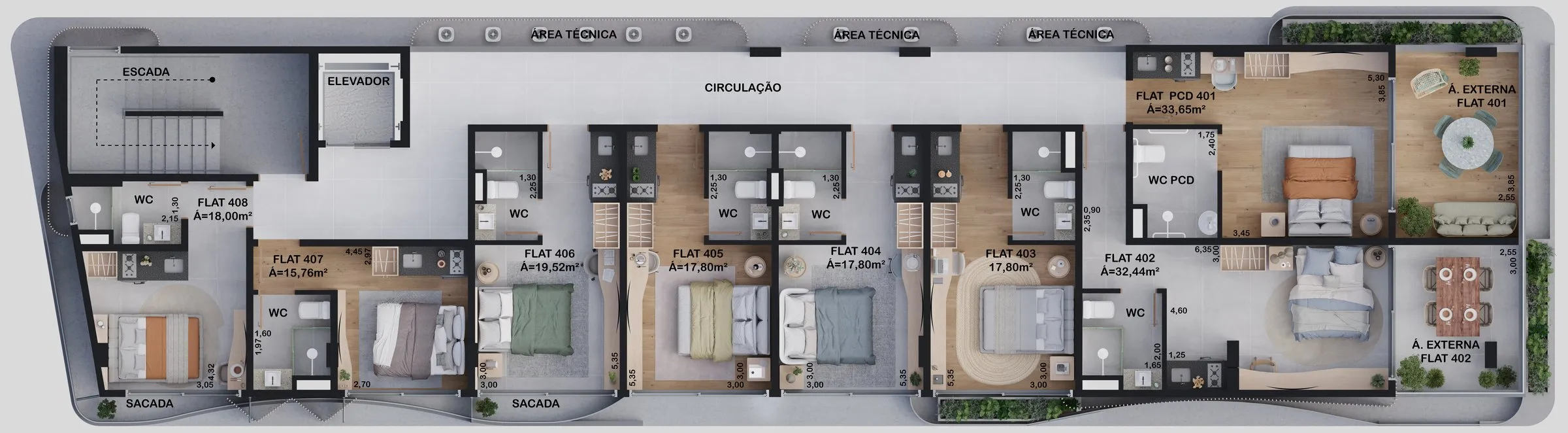 4th floor
 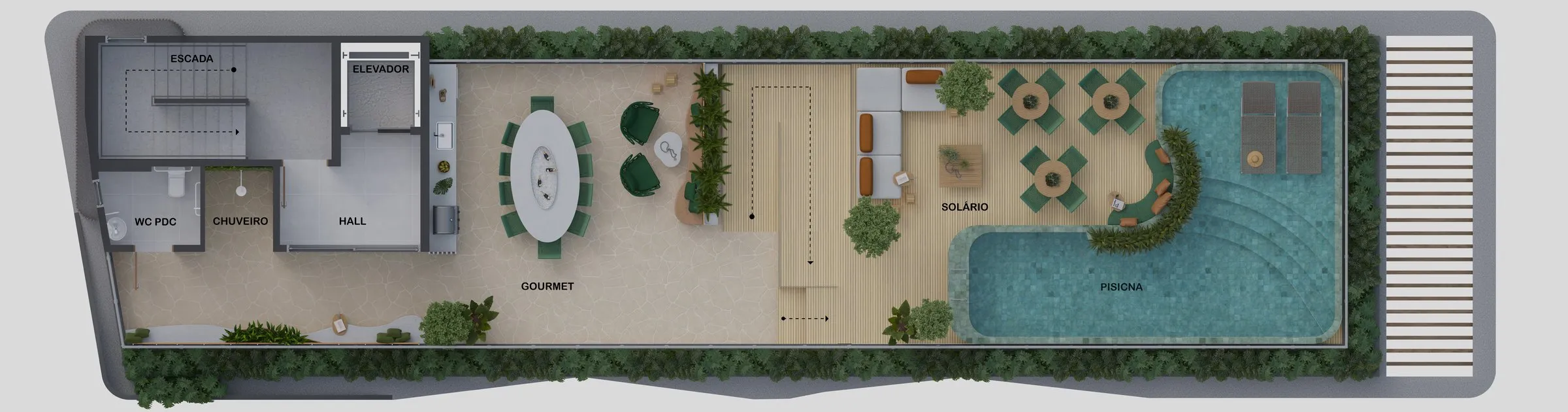 Rooftop
 Development registration R-10-40.039 · Permit 5088-24-JP-ALV · Handover expected December 2028
Why it rents all year round
An investment studio lives on nightly bookings, and nightly bookings live on people in town. Here, the hotel network closes January at 90% occupancy, and what fills the city is beach sports: beach tennis, volleyball, footvolley, marathon running, surfing.
7 km of beachfront boardwalk
Between the Tamandaré bust, to the north, and the Cabo Branco lighthouse, to the south. Both buildings sit in the middle of that stretch, and the championship arena is set up right in front.
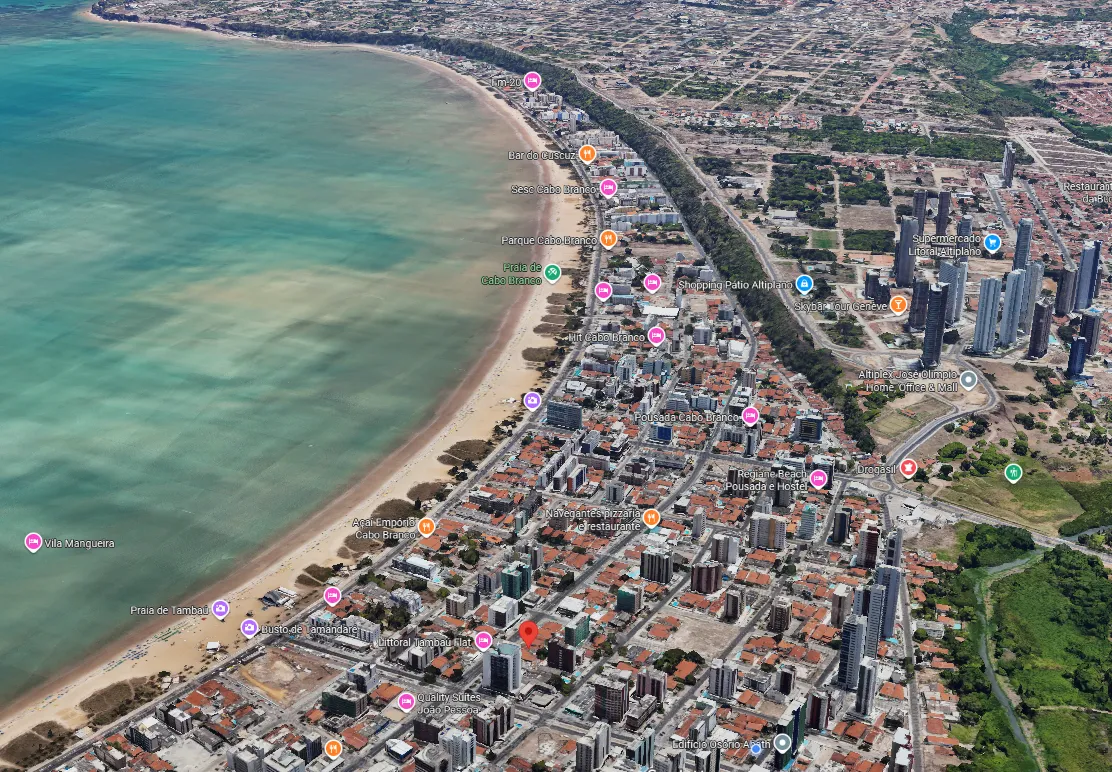 SOLEIL LUMINI
 Illustrative aerial view, not to scale. Full address and exact distances provided in the R.O.I. Consultation.
High season, right on the sand out front
December and January
Nearly 500,000 people on the sands of Tambaú and Cabo Branco for the 2026 New Year's turn.
Source: City of João PessoaFebruary to April
About 35 straight days of competition on the sand, with more than 10,000 athletes.
Source: Government of ParaíbaApril
About 400 athletes from 12 countries, and the Northeast's first stop on the international ranking circuit.
Source: PB AgoraAugust
The city celebrates its anniversary on August 5th, with a free concert on the Cabo Branco sand.
Source: ParaibaOnline

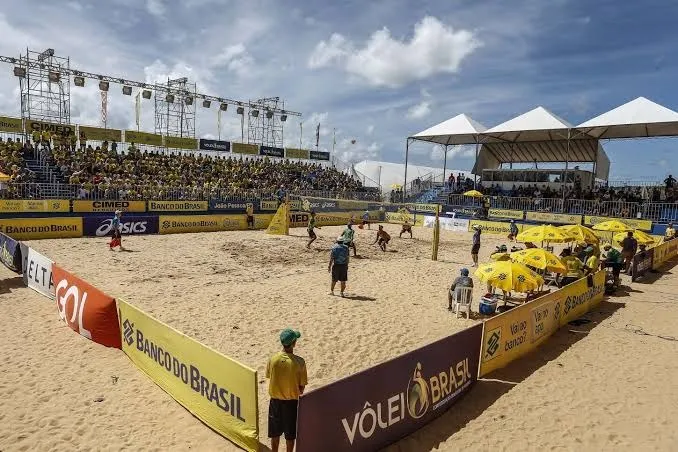
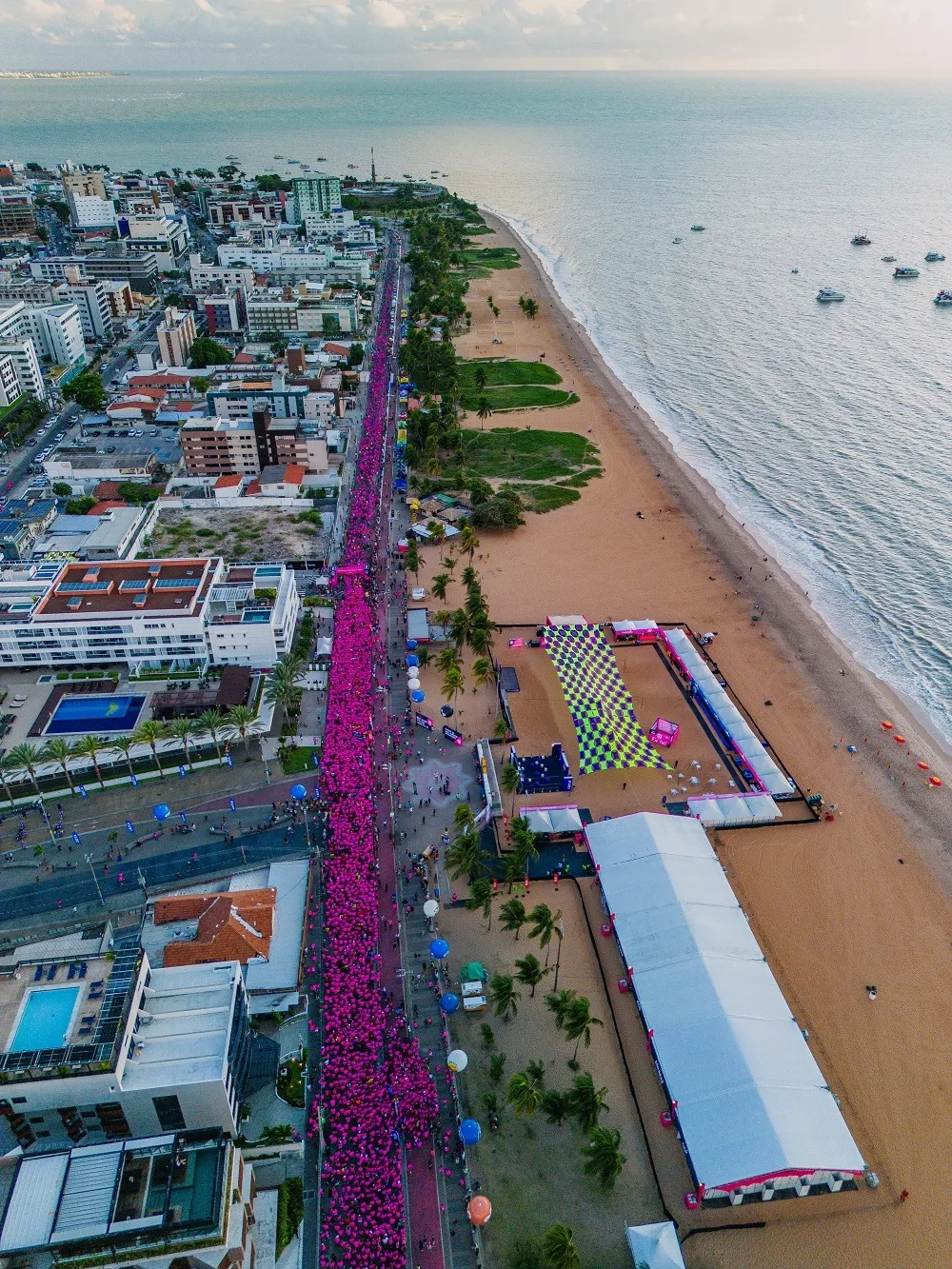

It's not a brochure. It's what got published.
The math the experienced investor runs
Buying off-plan doesn't mean paying it all upfront today, and that's exactly where most simulations get it wrong.
Phase 1 · during construction
Until the keys, 40% of the price is paid, spread across the down payment, monthly installments and balloon payments, straight to the developer with no bank interest. Meanwhile the property appreciates.
Out of your pocket until the keys: R$ 180,600
Phase 2 · from the keys onward
The remaining 60% is transferred to a bank loan. Financing R$ 294,300 over 30 years at today's lowest walk-in rate (11.19% a year plus TR, Caixa), the installment comes out lower than what short-term rental returns per month.
Mortgage installment (Price table): R$ 2,726 · what short-term rental returns: R$ 3,857
The same investment, in two appreciation scenarios
| Conservative | Optimistic | |
|---|---|---|
| What comes out of your pocket | R$ 180,6 mil | R$ 180,6 mil |
| What the property is worth at handover | R$ 520,5 mil | R$ 605,4 mil |
| What's already yours on handover day | R$ 226,2 mil | R$ 311,1 mil |
| If you sell right when you get the keys | +14% | +51% |
| If you hold and operate for 5 years | +204% | +443% |
| The property appreciates, per year | 8,81% | 15,15% |
| Your money grows, per year | 15,6% | 24,7% |
Illustrative scenario using the R$ 415,573 studio and the MGA August 2026 price table. Appreciation: FipeZap index for João Pessoa, 8.81% over the 12 months through July 2026 and 15.15% at the close of 2025, city-wide indices, not neighborhood-specific. For reference: the Selic base rate stood at 14.25% a year at the June 17, 2026 Copom meeting. Projections are not a guarantee of results.

Who signs
Five years running only income-generating real estate on the Paraíba coast. Broker at MyHome JP Investimentos, CRECI 10817.
Marlin
R$ 1.03 million
Bauten Mar
R$ 800,000
The developer
MGA Construções, 18 years in the Paraíba market.
Delivered portfolio: SOHO, MONDO, SENS and MAKAI.
Before you ask
Including the uncomfortable ones. The answers use measured data, with source and date, and include the scenario where things don't go as expected.
I don't promise returns. I don't promise appreciation. I don't work with manufactured scarcity. I show the full payment flow: down payment, installments, balloon payments, price adjustment and final balance.
When deciding
That's not what the numbers show. Just in Cabo Branco I track 1,035 active units on a data dashboard, and in the portfolio of 91 comparables I follow closely, average occupancy is 73%, with an average nightly rate of R$ 303. The best-run units hit 86%, 93%, 95%. What separates a 90%-occupancy unit from a 40% one is almost never the building: it's a well-calibrated nightly rate, a well-made listing and professional management.
It depends on the nightly rate and occupancy. In a study I ran, R$ 3,857 a month was left over in the average scenario, and R$ 200 in the most pessimistic scenario I modeled. And here's the point most people read wrong: the bulk of the return doesn't come from rental income, it comes from the property's appreciation, 15.15% a year at the close of 2025 by the FipeZap index (see "The math the experienced investor runs"). Rental income has a different job: covering the carrying cost, condo fees, property tax, utilities and maintenance, so you're not financing a loss while the property appreciates.
You don't need to take my word for it, you need to see the analysis. Before recommending any property I pull five layers: the neighborhood's real operating data on a dashboard, a portfolio of comparables from that exact area, IRR, ROI and payback over a ten-year cash flow with four scenarios, a comparison against the day's Selic rate, and a comparison across markets. When a property is priced above the neighborhood's average per square meter, I say so plainly and explain why.
You won't. Buying and operating are separate decisions, and the time to settle the second one is before the purchase, not once you have the keys in hand. I evaluate property managers with the same rigor I use for the property itself: rating, review volume and portfolio under management. A high rating on a small portfolio doesn't prove anything. Holding a high rating across more than ten thousand reviews does.
Don't believe me. Check for yourself. Every simulation I hand over comes with the assumptions laid bare: where each number came from, what the source is, what was assumed and what happens if it doesn't hold up. Take the material to your accountant, your lawyer, whoever you want. Analysis that can't survive a second opinion shouldn't have been made in the first place.
That's the simulation that matters, and it has to be run before you sign. I move the variables one at a time and then all together, looking for the point where the math stops working. Knowing where that point is changes the whole experience, because you start tracking a specific number instead of just hoping. If an investment only works when everything goes right, the risk hasn't disappeared, it just never made it into the spreadsheet.
Waiting also has a cost. The question is which of the two costs you more in your specific case. Buying now locks in today's terms and takes on construction risk. Waiting lets your money earn elsewhere and gives you more information, but you might face a different price and terms down the road. If the conclusion is to wait, we agree on what needs to happen for you to look again, and I'll let you know when it does.
You can, but almost never at the timeline or price you imagined. Real estate has no redemption window. Before buying, we look at what will determine your exit: whether there's an active buyer base in the area, how much competing inventory will be delivered alongside yours, what comparable units actually sold for, and how long it takes in practice. A rushed sale goes for less than the listing price, and that discount is part of the math from day one. If there's a real chance you'll need that money back within two years, this isn't the right investment.
When executing
You can, and it's fair to want to. It's just that every week you use is a week that doesn't generate income, and that has a price you can calculate ahead of time. We also check what the condo bylaws allow and what the management contract says about blocking dates. So it's simple: I simulate your two weeks in December and show you exactly what they cost. You decide with the number in front of you, not on a hunch.
Delay is a real risk, so it goes into the analysis as a scenario, with a number attached. We check the contractual handover date, the built-in grace period, what the contract guarantees you if it's exceeded, and the developer's track record on past deliveries. That last one is the most telling: a developer that has been delivering on time leaves a public trail, and I check that trail. Keys later means first income later, and you see that effect before deciding.
It's the installment that settles the property's price and is due when the keys are handed over. Anyone looking only at the monthly payment is seeing a quarter of the math: there's the down payment, monthly installments, balloon payments and a final balance, and the final balance is where most people trip up. I present all four together in the first meeting, name the price-adjustment index explicitly, and ask right at the start how you plan to cover that final balance. The answer changes which property I recommend.
It exists as a contract clause. Five questions settle it: who guarantees it, backed by what, for how long, what happens the month after the term ends, and the one almost nobody asks, whether that cost is already baked into the unit's price. In a lot of cases it is: the guarantee lasts 12 or 24 months and you already paid for it, inside the purchase price. I prefer the opposite approach, which is showing the market's real operation with measured data.
Transfer tax (ITBI) and registration on purchase, property tax through ownership, income tax on rental income during operation, and capital gains tax on sale. How much each one weighs depends on whether the purchase is in your own name or through a company. In my simulations, capital gains tax is already deducted from the exit scenario, because a return calculated without tax is a fantasy return. Final validation is your accountant's call, and I respect the limits of my own profession.
The full payment flow and price-adjustment index, handover deadline and grace period, the development's documentation and registration, condo bylaws and short-term rental rules, projected condo fees and fixed costs, the management contract including exit terms, and taxes. With me, we organize the list. With your lawyer, accountant and engineer, we check whatever falls within their specialty, always before signing. Signing with everything checked takes a few extra days, and every one of them is worth it.
You can, and a good share of my clients buy exactly this way. The path has four steps: a Brazilian tax ID (CPF, obtained at a consulate or through an attorney-in-fact at the Federal Revenue Service), a public power of attorney with specific powers (signed abroad, needs a Hague Apostille and a certified translation), sending the funds via an internationally registered wire transfer with the Central Bank, and signing by the attorney-in-fact. You don't need to enter the country at any step. Exiting the investment also has its own rules for people living abroad, and we work through that math with you before any decision.
Because a cheaper price per square meter usually comes with weaker operating performance, and it's the operation that pays the bills. I ran the same study on both markets, using dashboard data. Cabo Branco has 1,035 active units versus 130 in the neighboring market, eight times the liquidity when it's time to sell. The median nightly rate is R$ 235 to 240 versus R$ 200 to 210. Median occupancy in the market is 50% to 57% versus 40% to 45%. The best units here earn R$ 77,000 to 100,000 a year versus R$ 54,000 there. And 37% of units operate year-round, versus 23%, which points to a professional market rather than a seasonal-vacation one. One methodological note, since both figures appear on this page: the market's median occupancy is 50% to 57%, while the portfolio of 91 comparables I monitor closely runs at 73%. That's not a contradiction, it's selection. The portfolio is made up of well-chosen, well-run units, and the gap between those two numbers is exactly the size of the work I do.
The same answers in a document with the charts, the scenario tables and the sources in full. Made for you to read at your own pace and hand to your accountant or lawyer before deciding anything.
How it works
Return
What that unit really earns, not what the developer's table promises.
Occupancy
How many nights it actually sells per year, high and low season separated.
Investment
The answer: which apartment to buy, or whether it's better not to buy any.
All set.
We opened WhatsApp with your message ready to go. Just confirm sending it, and Eduardo, or his virtual assistant, will get back to you.
Response in under 60 seconds, any time of day. Your data is used only for this contact.
Hover to enlarge with the magnifier